24/7 water damage help in Calgary means a live dispatcher answers your call at any hour, a certified crew is mobilized immediately, and professional extraction equipment arrives at your door within hours — not a callback the next morning. This guide tells you exactly what that help looks like, what to do before the crew arrives, and what to expect when professionals show up.
Quick Answer:Call a 24/7 restoration company immediately. Shut off the water source, cut power to affected circuits, and document with photos before touching anything. The difference between calling within 2 hours versus waiting until morning can be $5,000–$15,000 CAD in additional damage.
Why Water Damage in Calgary Can't Wait
Calgary faces a higher-than-average frequency of water emergencies due to its climate: chinook warm-ups of 20°C in hours, spring snowmelt that overwhelms storm drains, and deep cold snaps that burst pipes in exterior walls. The 2013 Bow River flood inundated thousands of basements in Mission, Sunnyside, Bowness, and Erlton — smaller versions of that scenario play out in individual homes every week.
The IICRC S500 Standard documents exactly why time matters:
- Standard drywall begins absorbing moisture within minutes of contact
- After 24–48 hours in warm, humid conditions, mold colonization of wet organic materials becomes a genuine risk
- A $5,000 mitigation job addressed within 2 hours can become a $20,000 mold remediation project if ignored until morning
This is why genuine 24/7 availability — not voicemail, not a callback window — is the single most important attribute of a Calgary restoration company. For context on what full emergency response includes, see our overview of 24/7 restoration services in Calgary.
Your First 20-Minute Action Checklist
These steps, taken in order, reduce your total damage and protect your insurance claim:
- Shut off the water source. For burst pipes or appliance failures, close the main shutoff valve (typically in the mechanical room near the water meter). For external events (groundwater, sump failure), shutting off the supply doesn't stop inflow but eliminates one variable.
- Cut power to affected circuits. Turn off breakers serving the wet area before entering. If you're uncertain what's energized, or if water may have contacted live outlets or appliances, stay out and call a licensed electrician first.
- Document before touching anything. Take photos and video of every affected area — the source, the standing water, and all visibly damaged materials in their original positions. Your insurance adjuster needs to see the damage as found.
- Move valuables to dry areas. Electronics, important documents, and irreplaceable items come first. Lift furniture off wet carpet — metal feet and fabric dye can permanently stain flooring within hours.
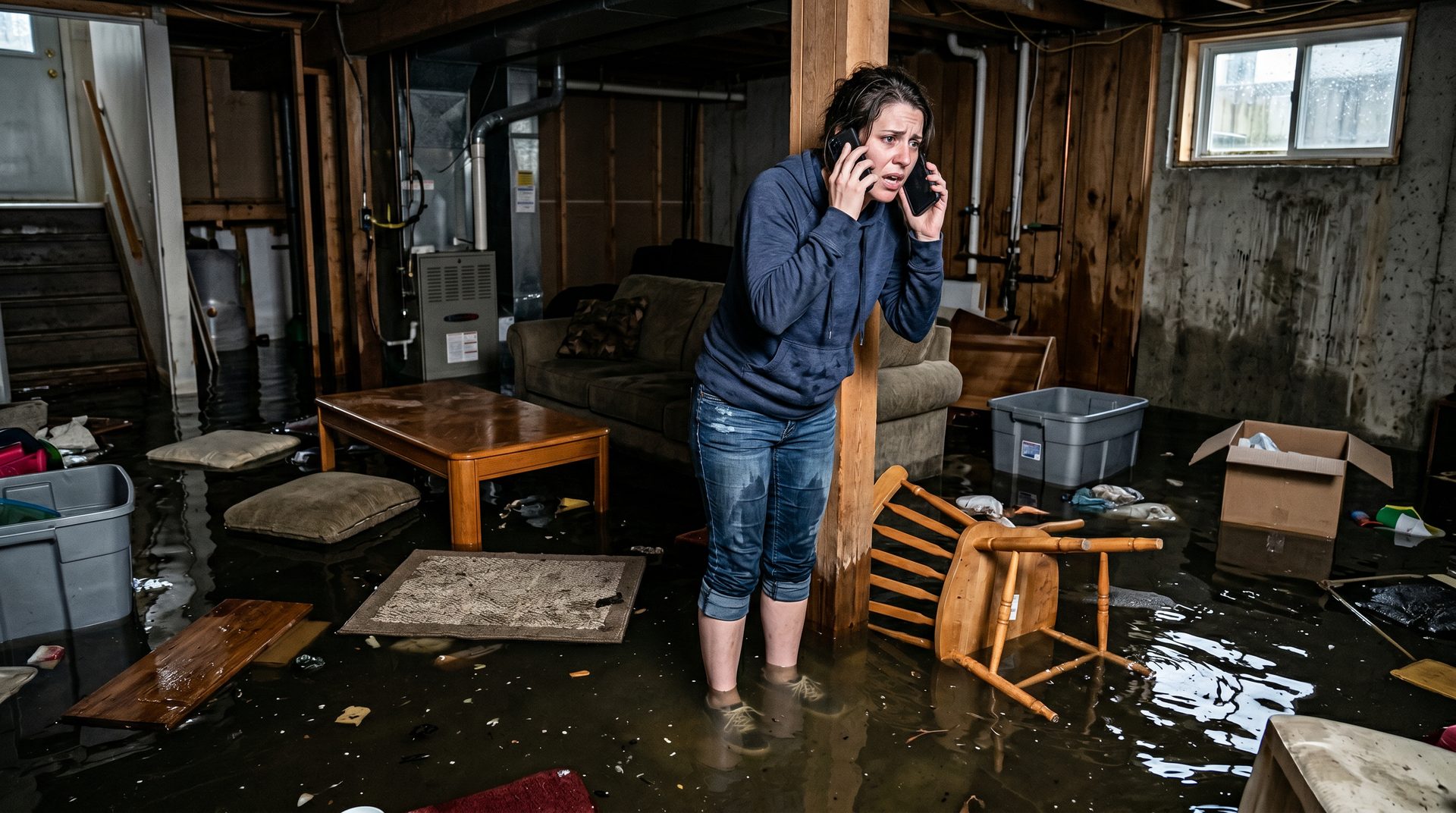
- Call a 24/7 restoration company now. Describe the source, the approximate affected area, and whether there is standing water. Don't wait until you've done more cleanup — call first, then continue documenting while you wait.
What Professional Water Damage Help Involves
When a certified crew arrives, the process follows a structured IICRC S500-compliant methodology in three phases.
Phase 1: Moisture Mapping
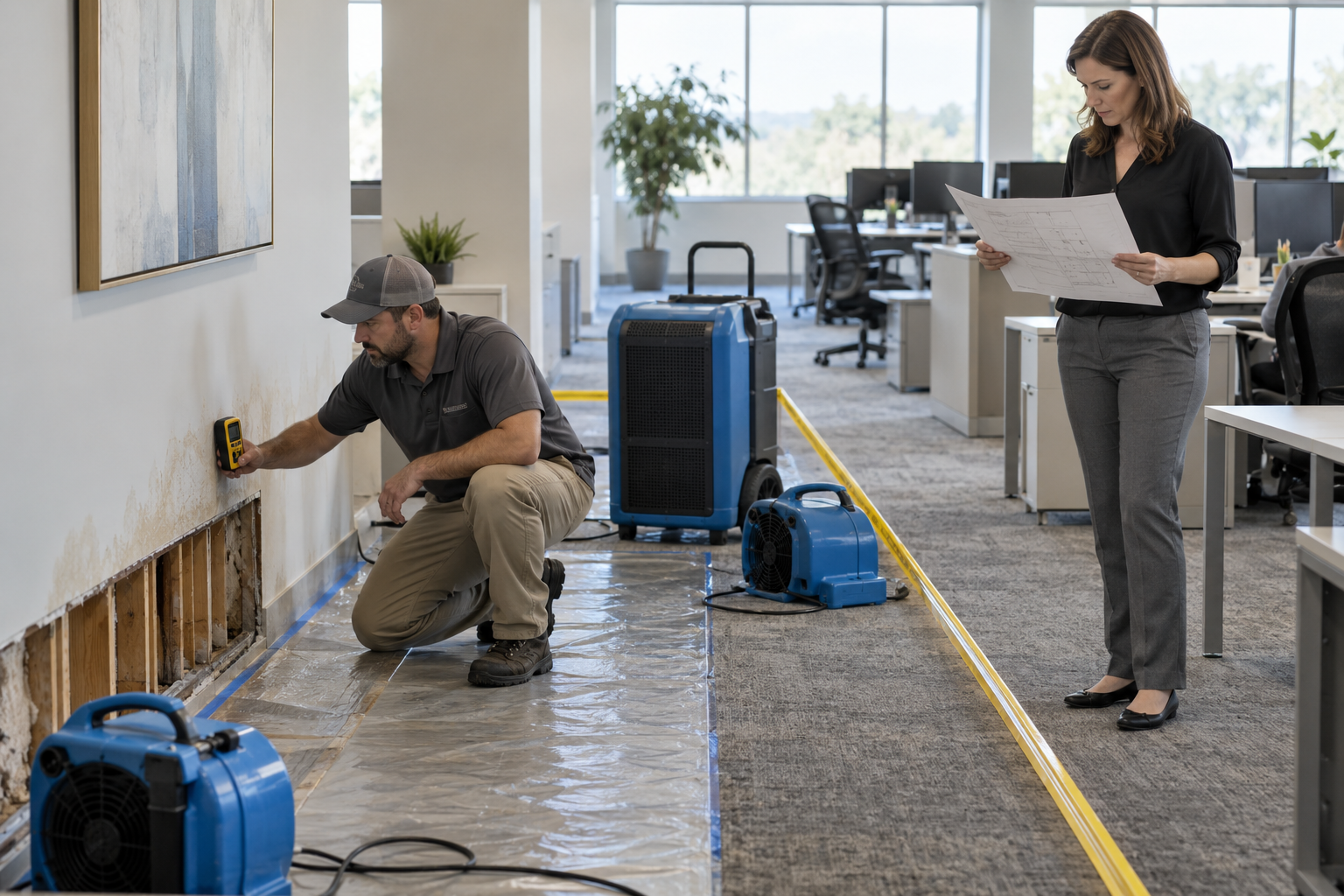
The crew uses thermal imaging cameras and calibrated moisture meters — not buckets and eyes — to map the true scope of water migration. Water travels: a bathroom overflow on the second floor moves into the ceiling below; a washing machine leak migrates under the baseboard into the adjacent bedroom. Professional moisture mapping finds all of it, not just the visible puddle.
Phase 2: Water Extraction
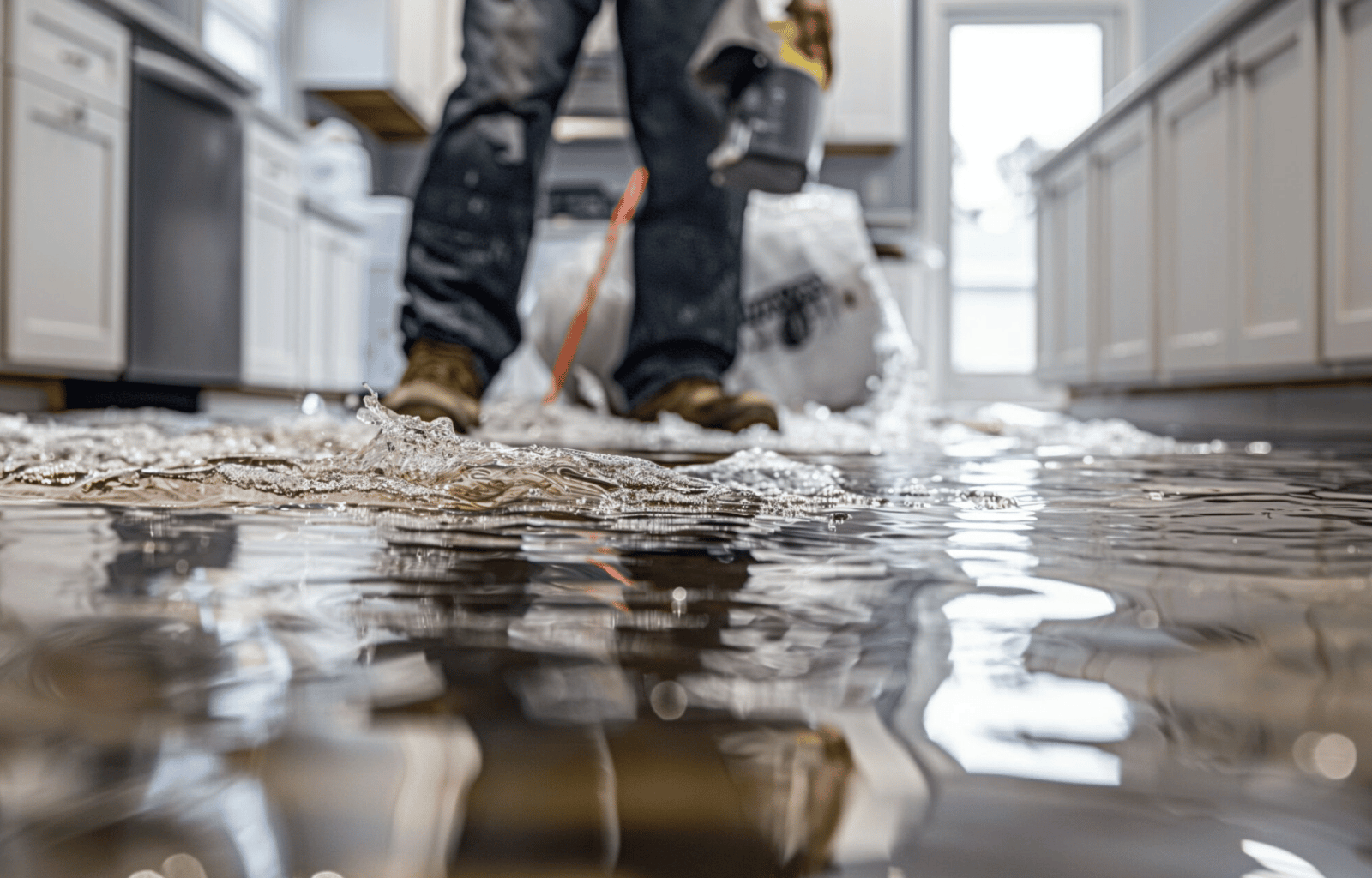
Industrial extractors remove standing water at rates residential equipment cannot match. Weighted extraction tools pull water from carpet backing and pad. In many cases, carpet pad must be removed — it traps moisture and becomes a secondary source if left in place. The carpet itself can often be saved with rapid response.
Phase 3: Structural Drying
High-velocity air movers and LGR (low-grain refrigerant) dehumidifiers work together. Air movers accelerate evaporation from wet surfaces; dehumidifiers capture the moisture before it redeposits or raises ambient humidity to mold-supportive levels. Wall cavities that cannot be dried from the surface may require flood cuts — horizontal drywall cuts 12–18 inches above the water line — to allow airflow through the framing. Technicians take daily moisture readings against IICRC S500 target levels. Standard drying takes 3–5 days. For more on the full process, see our guide to the water restoration process.
IICRC Water Damage Categories: What Each Means for You
| Category | Source | Health Risk | Key Protocol Difference |
|---|---|---|---|
| Category 1 — Clean Water | Burst supply line, malfunctioning appliance on potable system, rainfall through window | Low from water itself | Standard drying; focus on speed to prevent secondary mold |
| Category 2 — Grey Water | Dishwasher/washing machine overflow, toilet overflow (urine only), aquarium water | Sickness if ingested or contacted | Protective equipment required; some soft goods discarded rather than cleaned |
| Category 3 — Black Water | Sewage backup, river/storm drain floodwater, water sitting 24–48+ hours | Serious — pathogenic organisms present | Full biohazard protocols; all porous materials in contact must be removed and disposed of |
Categories can escalate: Category 1 water sitting in a warm basement for 24–48 hours can become Category 2 through microbial growth. Rapid response keeps contamination categories lower. If your emergency involves sewage, see our dedicated sewage backup cleanup service page for specific guidance.
Calgary Neighbourhoods and Water Damage Risk
Water damage risk is not evenly distributed across Calgary:
- Older inner-city communities (Bridgeland, Hillhurst, West Hillhurst, Mount Pleasant, Capitol Hill): 1940s–60s galvanized plumbing at or past service life — prone to sudden, complete failures
- Low-lying river neighbourhoods (Mission, Sunnyside, Erlton, Eau Claire, Inglewood): Elevated groundwater risk in spring; sump pumps run continuously during melt season — a power outage can fill a basement before homeowners notice
- Newer southeast/northwest suburbs (Cranston, Auburn Bay, Mahogany, Nolan Hill, Evanston): Fully finished basements representing high claim values; clay-heavy soils create hydrostatic pressure against foundation walls during melt events
Regardless of neighbourhood, the response is the same: document, call immediately, and let professionals handle extraction and drying. See our comprehensive guide to basement flooding in Calgary for neighbourhood-specific considerations.
Alberta Insurance: What Covers Water Damage
Understanding your coverage before an emergency matters — the claims process moves faster when you know your policy.
- Covered by standard policies: Sudden and accidental internal water damage — burst pipes, appliance failures, fixture overflows. The critical word is "sudden."
- Often excluded (requires endorsement): Overland flooding (surface water from outside), sewer backup, and gradual leaks. In Calgary, both overland flooding and sewer backup are recurring events — these endorsements typically add $50–$150/year and can cover tens of thousands of dollars in damage.
- Adjuster documentation requirement: IICRC-compliant drying reports, moisture logs, and detailed scope documentation. A restoration company that doesn't provide this is doing you a disservice regardless of the quality of their physical work.
For detailed guidance on the claims process, see our article on Calgary water damage restoration.
The Real Cost of Delaying the Call
Every hour between water onset and the start of professional drying represents measurable additional damage. Here's the progression:
- 0–2 hours: Surface-level damage — wet carpet, standing water, wet drywall surface. Extractable and dryable with rapid response.
- 2–8 hours: Water wicks into wall assemblies; engineered hardwood begins to cup at edges. Materials can still often be saved but the window is closing.
- 8–24 hours: Drywall loses structural integrity and typically must be replaced. Subfloor swelling causes permanent fastener failure. Insulation becomes a write-off.
- 24–72 hours: Mold colonization of wet porous materials becomes a near-certain risk in warm spaces. The job category shifts from water damage mitigation to mold remediation — significantly more expensive.
Restoration companies regularly encounter jobs that would have been $4,000–$8,000 mitigation projects if addressed within the first few hours, that instead became $15,000–$30,000 projects because the homeowner waited. If you're in a water emergency right now, stop reading and call.
Frequently Asked Questions
How do I know if my water damage is serious enough to call a professional?
If you have any standing water, visible wet drywall, wet carpet, or wet flooring from any source, call a professional. There is no reliable threshold of "minor" water damage that is safe to manage with household equipment alone. What appears minor on the surface may involve significant moisture migration behind walls or under flooring that is invisible without thermal imaging and moisture meters. The assessment call is typically free, and a professional can tell you within minutes whether the scope requires professional drying equipment.
Can I stay in my home during water damage restoration?
In most cases, yes. Unless the event involves Category 3 water (sewage), significant structural damage, or mold requiring containment, homeowners can remain during the drying phase. Industrial air movers and dehumidifiers are loud and generate heat but are not hazardous to occupants. If temporary relocation is necessary, document the cost — it may be covered under your policy's additional living expenses provision.
How long does the drying process take?
Standard drying following IICRC S500 methodology typically takes 3–5 days for a straightforward basement or main floor intrusion. Events involving multiple floors, saturated structural framing, or partial demolition can take 7–10 days or longer. Drying is complete when target moisture levels specified by IICRC S500 are reached in the affected materials — not when an arbitrary timeline expires.
Will my insurance cover 24/7 emergency restoration service?
Most standard Alberta homeowner policies cover professional mitigation costs for sudden and accidental water damage, including emergency response fees. The after-hours nature of the service does not create an exclusion. The key requirements are thorough documentation before cleanup begins and IICRC-compliant documentation from your restoration company — both of which Calgary Restoration provides as a standard part of every project.
What is the difference between a mitigation company and a restoration company?
A mitigation company handles extraction, drying, and stabilization. A restoration company handles the reconstruction phase — replacing drywall, flooring, and other removed materials. Calgary Restoration is full-service and handles both phases under a single contract, simplifying the process and the insurance claim. Learn more on our water damage restoration page or contact us to discuss your situation.
Get 24/7 Water Damage Help in Calgary Right Now
If you're dealing with water damage now, stop reading and call Calgary Restoration. We operate genuine 24/7 emergency response with live dispatch around the clock. A crew can be at your Calgary home within hours, equipped with professional extraction and drying equipment, ready to stop the damage before it compounds.
We are IICRC-certified, fully insured, and experienced in working with every major Alberta insurer. Visit our contact page or call our emergency line directly to reach us right now.
Easy steps to create a color palette
Lorem ipsum dolor sit amet, consectetur adipiscing elit lobortis arcu enim urna adipiscing praesent velit viverra sit semper lorem eu cursus vel hendrerit elementum morbi curabitur etiam nibh justo, lorem aliquet donec sed sit mi dignissim at ante massa mattis.
- Neque sodales ut etiam sit amet nisl purus non tellus orci ac auctor
- Adipiscing elit ut aliquam purus sit amet viverra suspendisse potent
- Mauris commodo quis imperdiet massa tincidunt nunc pulvinar
- Excepteur sint occaecat cupidatat non proident sunt in culpa qui officia
What is a color palette?
Vitae congue eu consequat ac felis placerat vestibulum lectus mauris ultrices cursus sit amet dictum sit amet justo donec enim diam porttitor lacus luctus accumsan tortor posuere praesent tristique magna sit amet purus gravida quis blandit turpis.

Don’t overspend on growth marketing without good retention rates
At risus viverra adipiscing at in tellus integer feugiat nisl pretium fusce id velit ut tortor sagittis orci a scelerisque purus semper eget at lectus urna duis convallis porta nibh venenatis cras sed felis eget neque laoreet suspendisse interdum consectetur libero id faucibus nisl donec pretium vulputate sapien nec sagittis aliquam nunc lobortis mattis aliquam faucibus purus in.
- Neque sodales ut etiam sit amet nisl purus non tellus orci ac auctor
- Adipiscing elit ut aliquam purus sit amet viverra suspendisse potenti
- Mauris commodo quis imperdiet massa tincidunt nunc pulvinar
- Adipiscing elit ut aliquam purus sit amet viverra suspendisse potenti
What’s the ideal customer retention rate?
Nisi quis eleifend quam adipiscing vitae aliquet bibendum enim facilisis gravida neque euismod in pellentesque massa placerat volutpat lacus laoreet non curabitur gravida odio aenean sed adipiscing diam donec adipiscing tristique risus amet est placerat in egestas erat.
“Lorem ipsum dolor sit amet consectetur adipiscing elit, sed do eiusmod tempor incididunt ut labore et dolore magna aliqua enim ad minim veniam.”
Next steps to increase your customer retention
Eget lorem dolor sed viverra ipsum nunc aliquet bibendum felis donec et odio pellentesque diam volutpat commodo sed egestas aliquam sem fringilla ut morbi tincidunt augue interdum velit euismod eu tincidunt tortor aliquam nulla facilisi aenean sed adipiscing diam donec adipiscing ut lectus arcu bibendum at varius vel pharetra nibh venenatis cras sed felis eget.