Quick Answer:Calgary water damage restoration involves emergency water extraction, structural drying to IICRC S500 standards, mold prevention, and reconstruction. Response within the first 24 hours is critical — mold can begin growing in as little as 24–48 hours. Calgary-specific risks include freeze-thaw pipe bursts, clay-soil foundation intrusion, and spring snowmelt flooding.
Why Water Damage Is So Common in Calgary
Calgary sits at 1,048 metres above sea level and experiences more freeze-thaw cycles per year than most major Canadian cities. Each cycle stresses pipes, cracks sealants, expands concrete fractures, and loosens the soil supporting foundation walls.
Clay-heavy soils in communities like Evergreen, Bridlewood, Legacy, and Shawnessy expand when saturated and contract when dry, creating lateral pressure against basement foundations. Over years of seasonal cycling, this causes hairline cracks that become water entry pathways during spring snowmelt or heavy summer storms.
Spring snowmelt — typically March through May — is Calgary's highest-risk period for basement flooding. In high-snowpack years, rapid melt combined with frozen ground and strained combined sewer systems creates conditions for both surface flooding and sewage backup events.
What Happens in the First 24 Hours
The first 24 hours after a water damage event are the most critical. Water migrates through porous building materials via capillary action — drywall can absorb moisture to a height of 2–3 feet above the standing water line, which is why flood cuts are often made higher than the visible waterline.
Correct First-24-Hour Response Sequence
- Stop the source water at the nearest shutoff valve if it is safe to do so.
- Turn off electrical circuits serving the flooded area from a dry location.
- Document all visible damage with photos and video before moving anything.
- Contact your insurance company to initiate a claim.
- Call a certified water damage restoration company — do not run fans or use a household vacuum.
Mold germination can begin within 24–48 hours under the temperature conditions of any occupied Calgary home (18–22°C). The IICRC S500 Standard for Professional Water Damage Restoration uses this biological timeline as the basis for its urgency guidelines. Do not wait until morning if water damage is discovered at night.
Quick Answer:Do not use household fans on wet carpeting — this pushes surface moisture deeper into flooring assemblies. Do not vacuum standing water with a standard vacuum — it creates an electrical hazard. Wait for professional extraction equipment.
Water Damage Categories: Clean vs. Contaminated
| Category | Source | Health Risk | Response Protocol |
|---|---|---|---|
| Category 1 (Clean) | Burst supply line, overflowing sink | Low | Standard extraction and drying |
| Category 2 (Grey Water) | Washing machine overflow, dishwasher | Moderate — contaminants present | Extraction, antimicrobial treatment, drying |
| Category 3 (Black Water) | Sewage backup, floodwater | High — biohazard protocols required | Full PPE, porous material removal, decontamination |
Water category can degrade over time. Category 1 water sitting in a warm basement for 48 hours absorbs organic material from building materials and becomes Category 2. Category 2 events left unaddressed escalate to Category 3. This is another reason immediate professional response is critical.
IICRC S500 Damage Classes: What They Mean for Your Project
- Class 1 — Small area, low absorption materials (concrete floor, minimal drywall). Fastest and least costly to dry.
- Class 2 — Entire room with carpet, pad, and wet walls to 24 inches. Typical Calgary basement scenario.
- Class 3 — Overhead-source water, wetness throughout walls, ceilings, and insulation. Requires more equipment and longer drying time.
- Class 4 — Deeply saturated specialty materials: hardwood flooring, plaster, concrete, brick. Requires desiccant drying; longest timelines.
Class 3 and Class 4 losses involve more equipment, longer drying timelines (often 5–10 days vs. 2–4 days for Class 1), and more extensive material removal. A restoration company should document the class in their written scope of work.
The Professional Water Damage Restoration Process
- Emergency response and safety assessment — Confirm electrical safety, identify water source, assess structural stability.
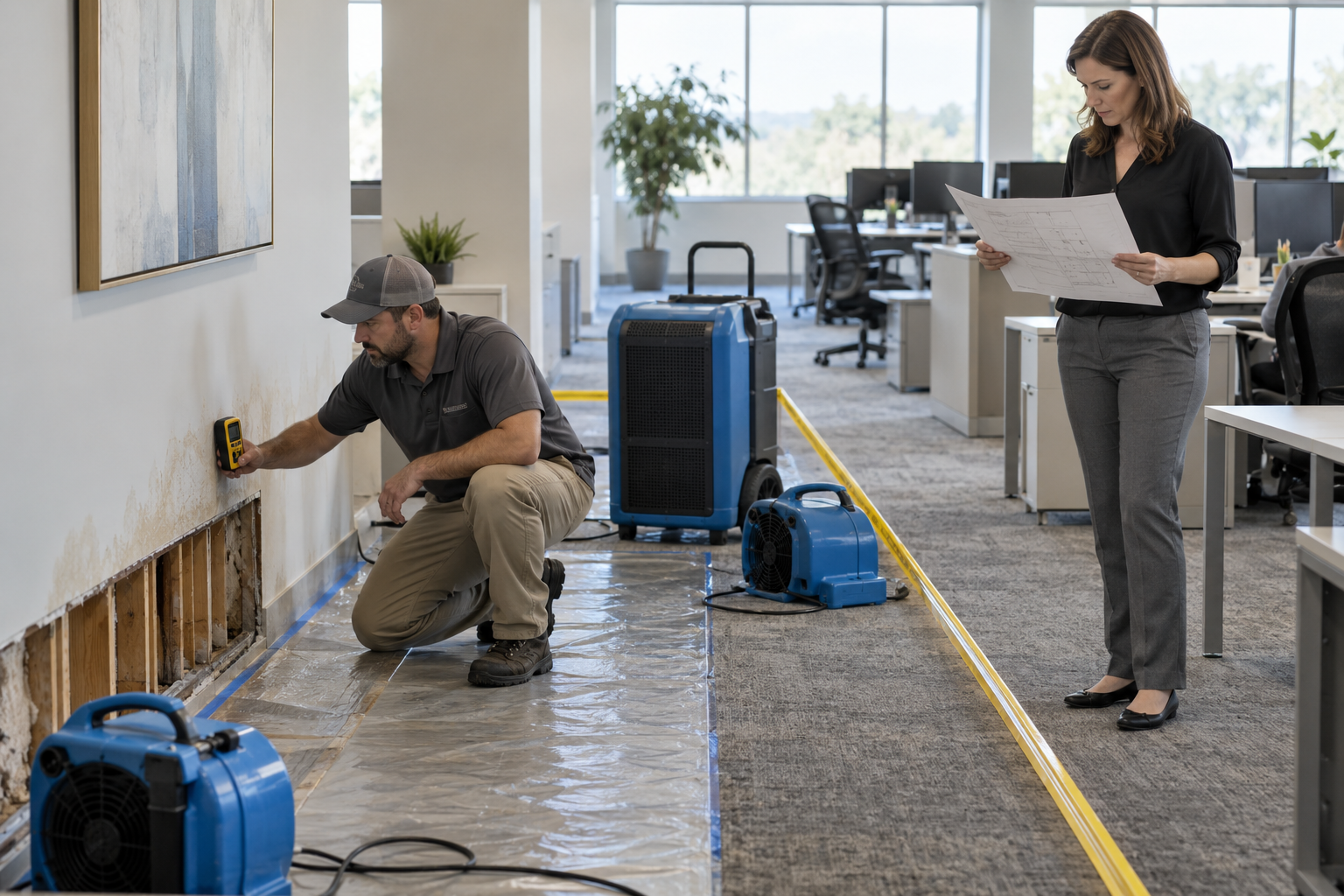
- Moisture mapping — Thermal imaging camera and pin/pinless moisture meters map affected materials throughout the structure.
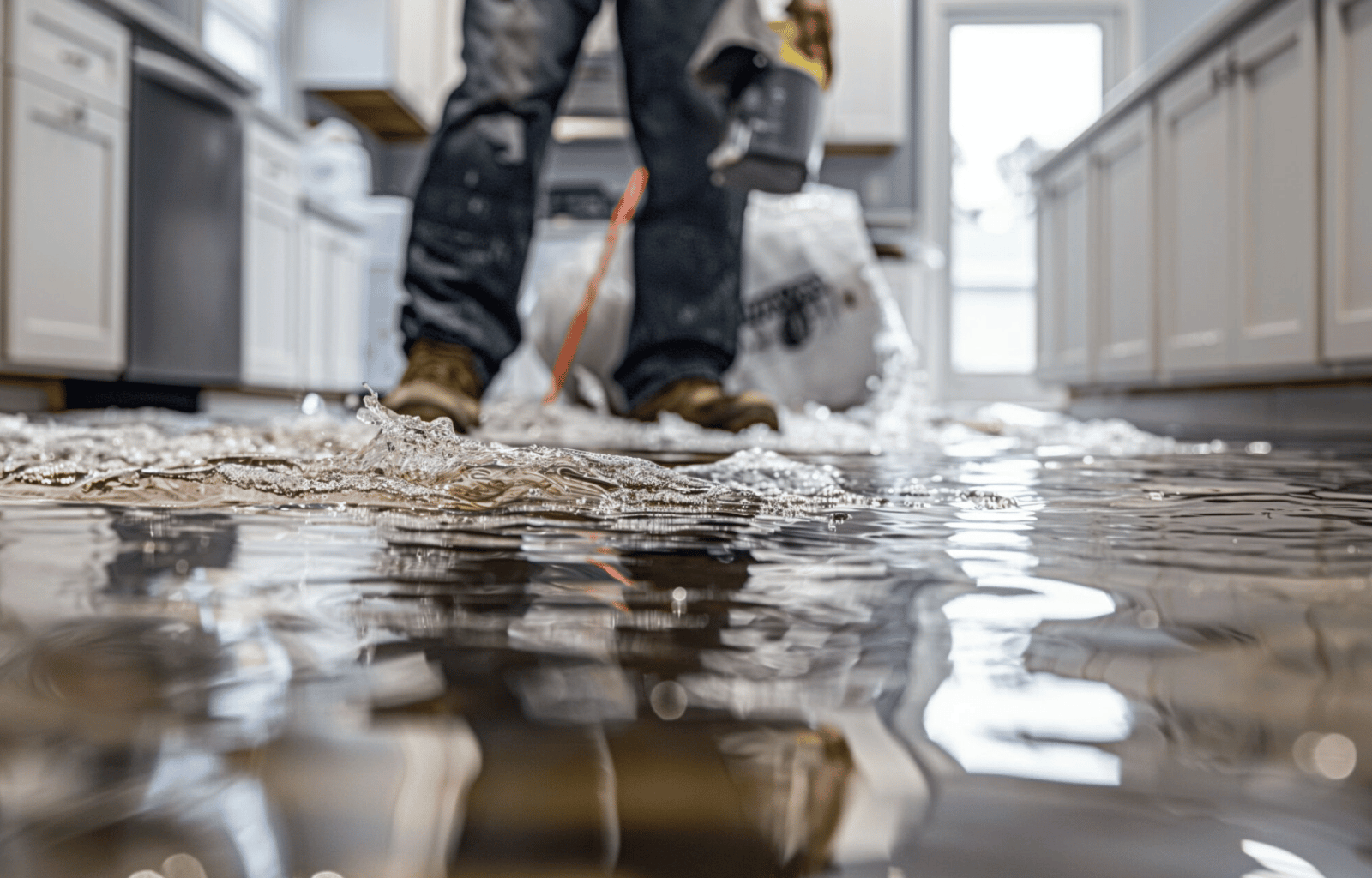
- Water extraction — Truck-mounted or portable extractors remove standing water. Submersible pumps handle deep standing water in basements.
- Controlled demolition — Flood cuts in drywall, removal of saturated insulation and carpet, and access openings allow drying of wall cavities.
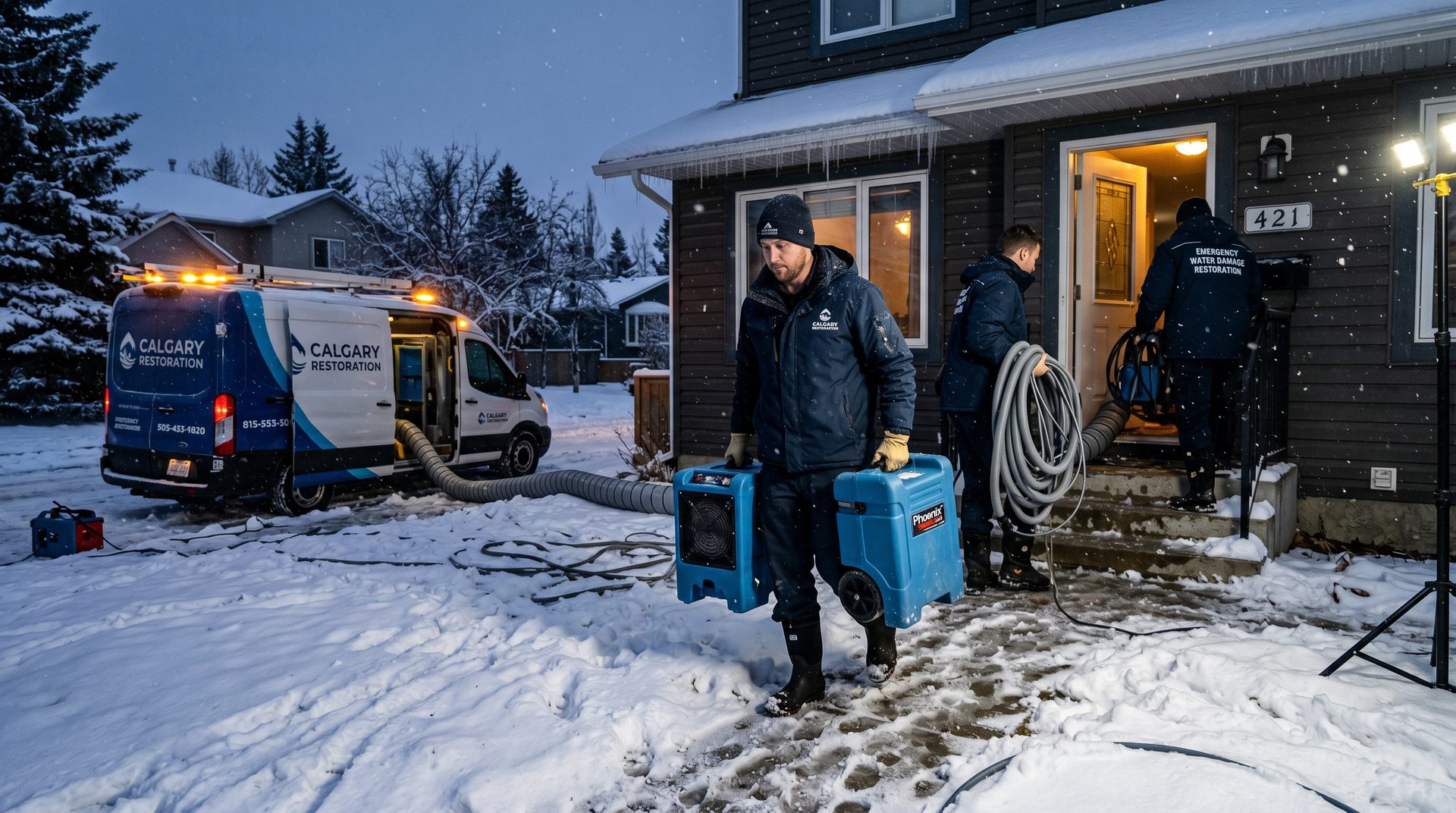
- Commercial drying equipment deployment — LGR and desiccant dehumidifiers, air movers, and specialized drying mats are positioned according to a drying plan. Calgary winters require equipment rated for low-temperature performance.
- Daily monitoring — Moisture readings are taken and logged daily. Equipment is adjusted based on drying progress. IICRC S500 drying targets: wood below 16%, concrete below 0.5%.
- Mold prevention treatment — Antimicrobial treatments applied to exposed structural members after drying is confirmed.
- Reconstruction — New drywall, insulation, flooring, and finishes are installed after the structure passes moisture verification.
Water Damage Restoration Cost Ranges in Calgary
| Scenario | Typical Cost (CAD) | Drying Timeline |
|---|---|---|
| Small Class 1 loss (single room, minimal materials) | $2,000 – $5,000 | 2–4 days |
| Standard basement flood (Class 2, carpet and drywall) | $5,000 – $12,000 | 3–7 days |
| Extensive or Class 3/4 loss | $10,000 – $25,000+ | 7–14 days |
| Sewage backup (Category 3) | $8,000 – $20,000+ | 5–10 days plus reconstruction |
Reconstruction costs — replacing drywall, flooring, insulation, and finishes — are separate from the mitigation costs above and are covered under the dwelling portion of most Alberta homeowner's insurance policies.
How Alberta Insurance Covers Water Damage
Most Alberta homeowner's insurance policies cover sudden, accidental water damage from sources like burst pipes, appliance failures, and certain sewer backup events (with the sewer backup endorsement). Gradual damage — a slow drip from a supply line that has been leaking for months — is typically excluded as a maintenance issue.
What to Document for Your Insurance Claim
- Photos and video of all affected areas before anything is moved or removed
- The restoration company's moisture map and initial assessment report
- Daily drying logs showing moisture readings from start through completion
- A written scope of work from the restoration company specifying all tasks and materials
- All invoices from both emergency mitigation and reconstruction phases
Frequently Asked Questions
How quickly should water damage restoration begin in Calgary?
Professional water extraction should ideally begin within 2–4 hours of discovering water damage. Mold germination can begin within 24–48 hours in a warm, occupied Calgary home. Every hour that water remains in contact with porous building materials — drywall, insulation, wood framing, carpet — increases the total scope and cost of the project. Calling a 24/7 emergency restoration service immediately after discovery is always the right decision.
What are signs of hidden water damage in a Calgary home?
- Musty or earthy odour in the basement or lower level
- Bubbling, peeling, or staining of paint on walls or ceilings
- Soft spots or bounce in flooring (indicating saturated subfloor)
- Visible dark staining or discoloration on drywall, especially near baseboards
- Condensation on interior wall surfaces or cold spots detected by hand
- Unexplained increases in water bills (indicating a slow plumbing leak)
How long does water damage restoration take in a Calgary basement?
A standard basement project takes 3–7 days for drying, followed by reconstruction. Class 3 or Category 3 (sewage backup) projects can extend drying to 10–14 days. Total project timelines including reconstruction typically range from 2–6 weeks. Calgary's cold winter temperatures slow evaporative drying, which is why certified companies use commercial LGR and desiccant dehumidifiers rated for low-temperature performance.
What is the difference between water mitigation and water damage restoration?
Water mitigation is the emergency phase: stopping the water, extracting standing water, and establishing drying equipment to prevent further damage. Restoration is the complete process of returning the home to pre-loss condition, including structural repairs and rebuilding. Some companies do only mitigation; full-service companies handle both phases under one contract, which means faster project completion and clearer accountability.
Does Alberta homeowner's insurance cover water damage restoration costs?
Most Alberta policies cover sudden, accidental water damage. The mitigation obligation in most policies actually requires you to take steps to prevent further damage — which means calling a restoration company immediately supports your claim. Gradual damage, seepage through cracks, and overland flooding may require specific endorsements. Review your policy before an event, and contact your insurer within hours of any water damage discovery.
What Calgary neighbourhoods are most at risk for basement flooding?
Communities on clay-heavy soils in southwest Calgary — including Evergreen, Bridlewood, Legacy, Shawnessy, and Tuscany — face elevated foundation intrusion risk. Older communities with combined sewer systems — including parts of Beltline, Inglewood, Ramsay, and Forest Lawn — face higher sewer backup risk during spring peak flows. Homes near the Bow and Elbow Rivers carry overland flood exposure. Understanding your specific risk helps determine the right preventive measures, including backwater valve installation and sump pump maintenance.
Can I dry water damage myself with fans and a rental dehumidifier?
Consumer fans and rental dehumidifiers cannot achieve the air changes per hour and moisture extraction rates required by IICRC S500 standards. A typical residential dehumidifier removes 30–50 litres of water per day; commercial LGR dehumidifiers used by professional restoration companies remove 100–200+ litres per day under similar conditions. Inadequate drying leaves moisture in wall cavities and subfloor assemblies where it is invisible until mold growth makes it apparent — typically 2–4 weeks after the event. Professional drying costs are almost always covered by insurance and are a fraction of the mold remediation cost they prevent.
For more on flood damage cleanup or to discuss your specific situation, contact our team — we respond 24 hours a day, seven days a week.
Easy steps to create a color palette
Lorem ipsum dolor sit amet, consectetur adipiscing elit lobortis arcu enim urna adipiscing praesent velit viverra sit semper lorem eu cursus vel hendrerit elementum morbi curabitur etiam nibh justo, lorem aliquet donec sed sit mi dignissim at ante massa mattis.
- Neque sodales ut etiam sit amet nisl purus non tellus orci ac auctor
- Adipiscing elit ut aliquam purus sit amet viverra suspendisse potent
- Mauris commodo quis imperdiet massa tincidunt nunc pulvinar
- Excepteur sint occaecat cupidatat non proident sunt in culpa qui officia
What is a color palette?
Vitae congue eu consequat ac felis placerat vestibulum lectus mauris ultrices cursus sit amet dictum sit amet justo donec enim diam porttitor lacus luctus accumsan tortor posuere praesent tristique magna sit amet purus gravida quis blandit turpis.

Don’t overspend on growth marketing without good retention rates
At risus viverra adipiscing at in tellus integer feugiat nisl pretium fusce id velit ut tortor sagittis orci a scelerisque purus semper eget at lectus urna duis convallis porta nibh venenatis cras sed felis eget neque laoreet suspendisse interdum consectetur libero id faucibus nisl donec pretium vulputate sapien nec sagittis aliquam nunc lobortis mattis aliquam faucibus purus in.
- Neque sodales ut etiam sit amet nisl purus non tellus orci ac auctor
- Adipiscing elit ut aliquam purus sit amet viverra suspendisse potenti
- Mauris commodo quis imperdiet massa tincidunt nunc pulvinar
- Adipiscing elit ut aliquam purus sit amet viverra suspendisse potenti
What’s the ideal customer retention rate?
Nisi quis eleifend quam adipiscing vitae aliquet bibendum enim facilisis gravida neque euismod in pellentesque massa placerat volutpat lacus laoreet non curabitur gravida odio aenean sed adipiscing diam donec adipiscing tristique risus amet est placerat in egestas erat.
“Lorem ipsum dolor sit amet consectetur adipiscing elit, sed do eiusmod tempor incididunt ut labore et dolore magna aliqua enim ad minim veniam.”
Next steps to increase your customer retention
Eget lorem dolor sed viverra ipsum nunc aliquet bibendum felis donec et odio pellentesque diam volutpat commodo sed egestas aliquam sem fringilla ut morbi tincidunt augue interdum velit euismod eu tincidunt tortor aliquam nulla facilisi aenean sed adipiscing diam donec adipiscing ut lectus arcu bibendum at varius vel pharetra nibh venenatis cras sed felis eget.