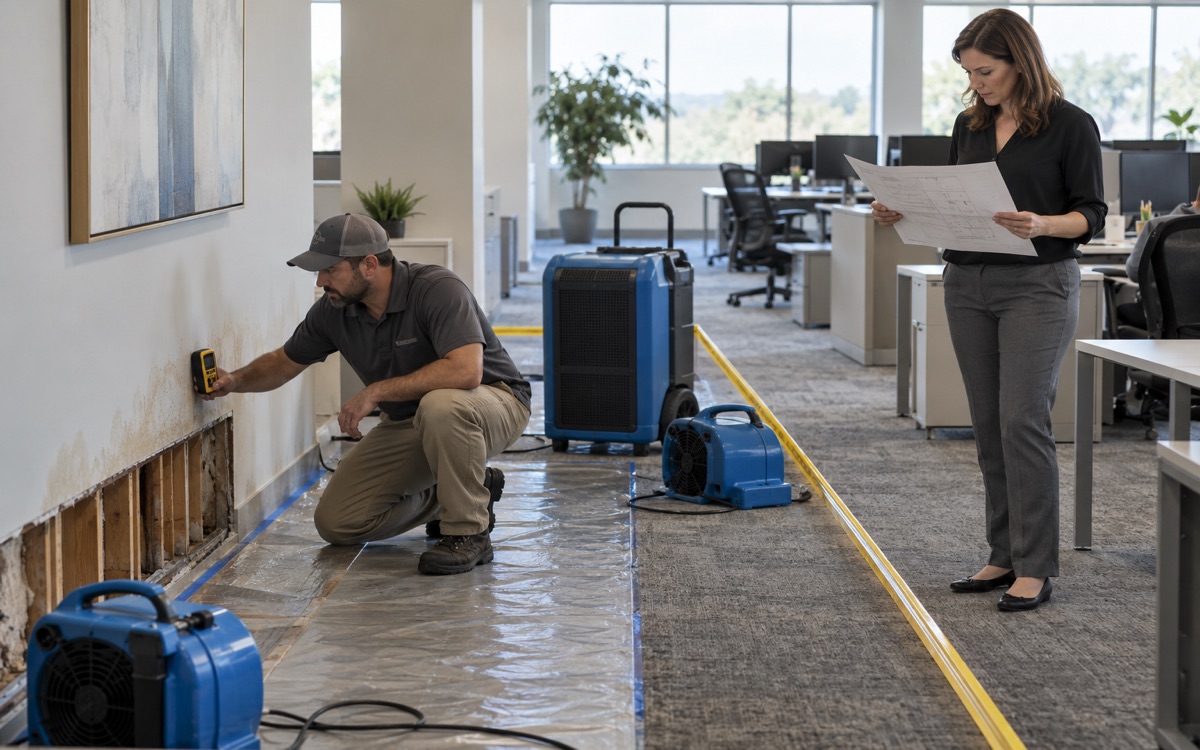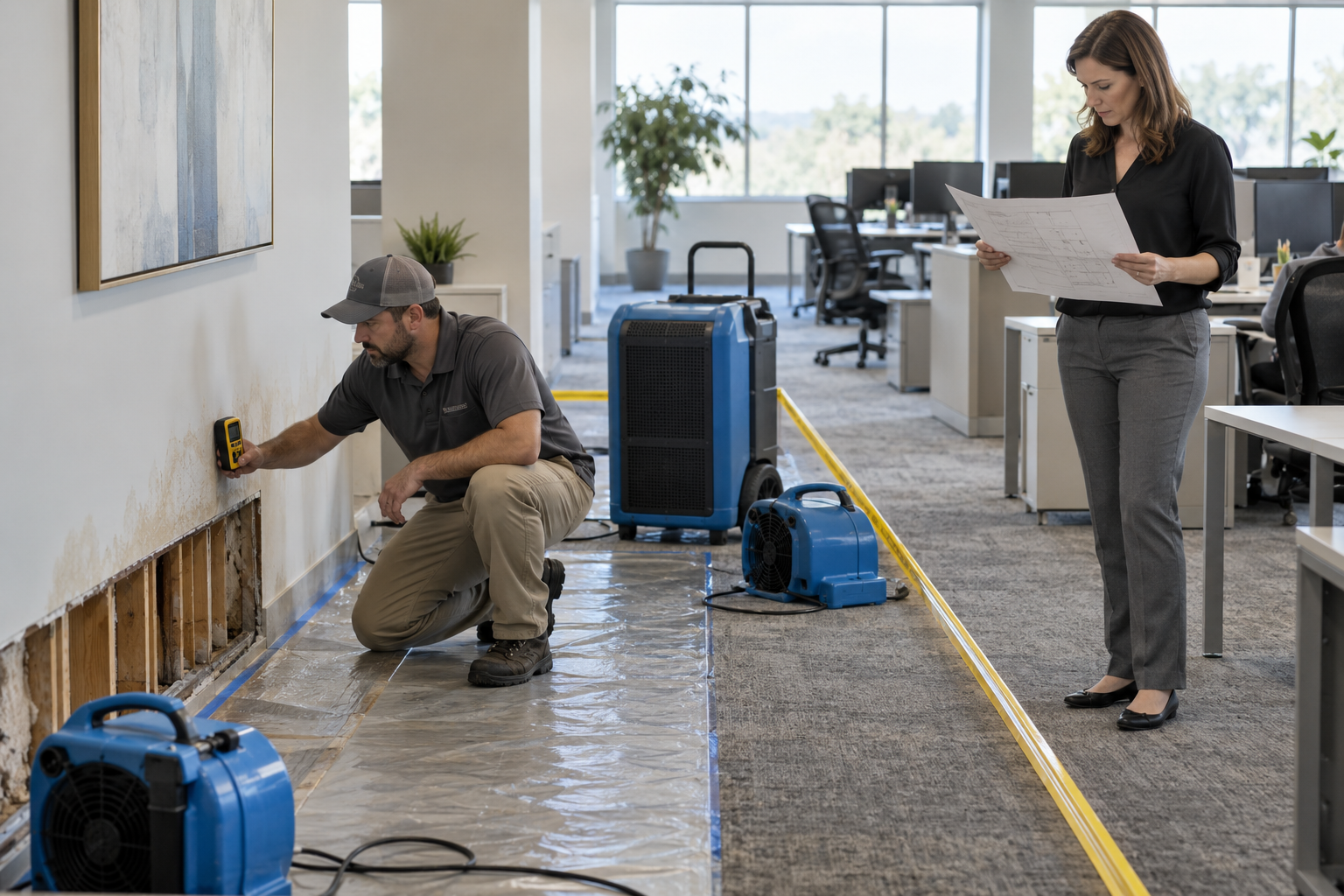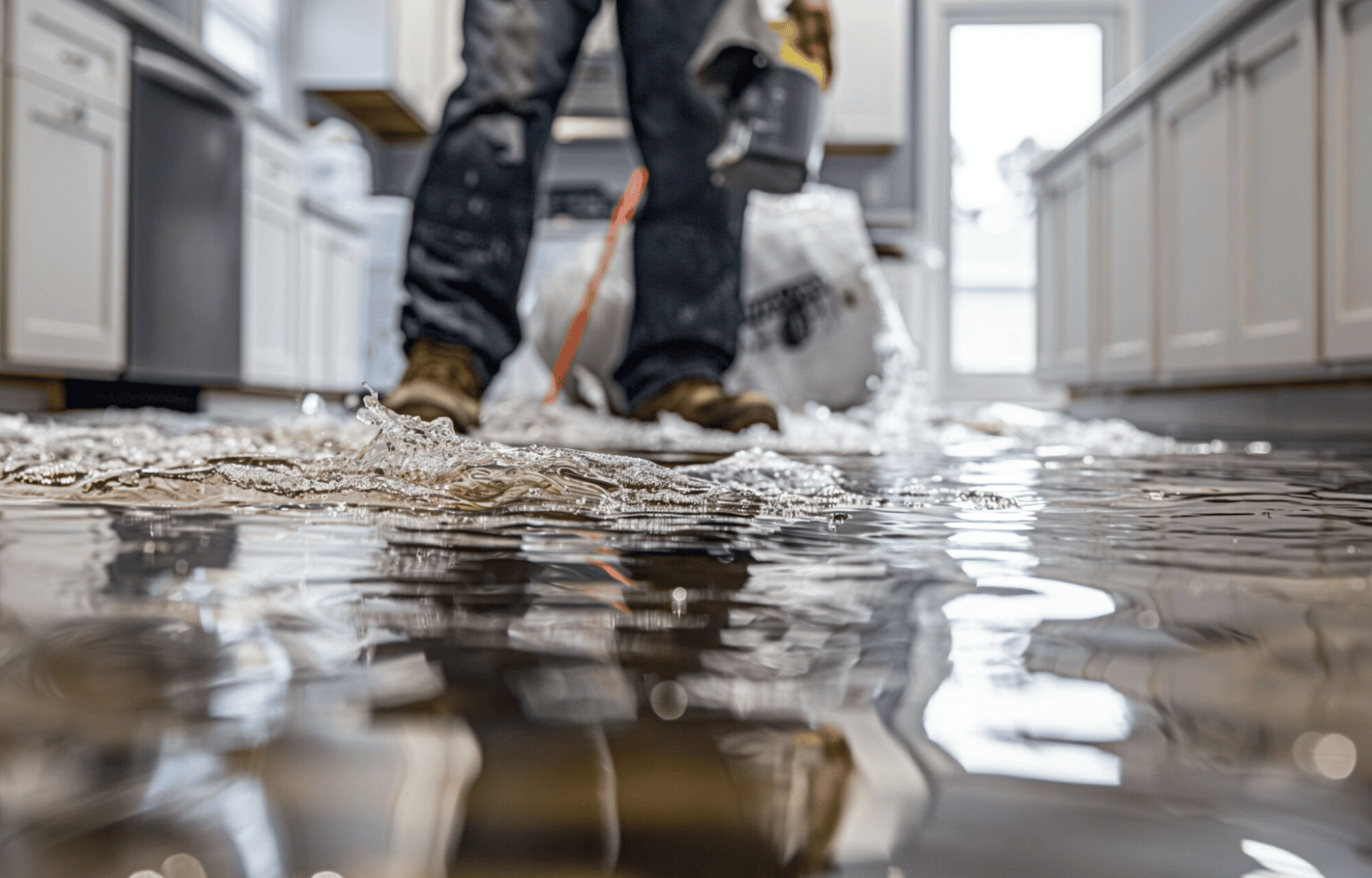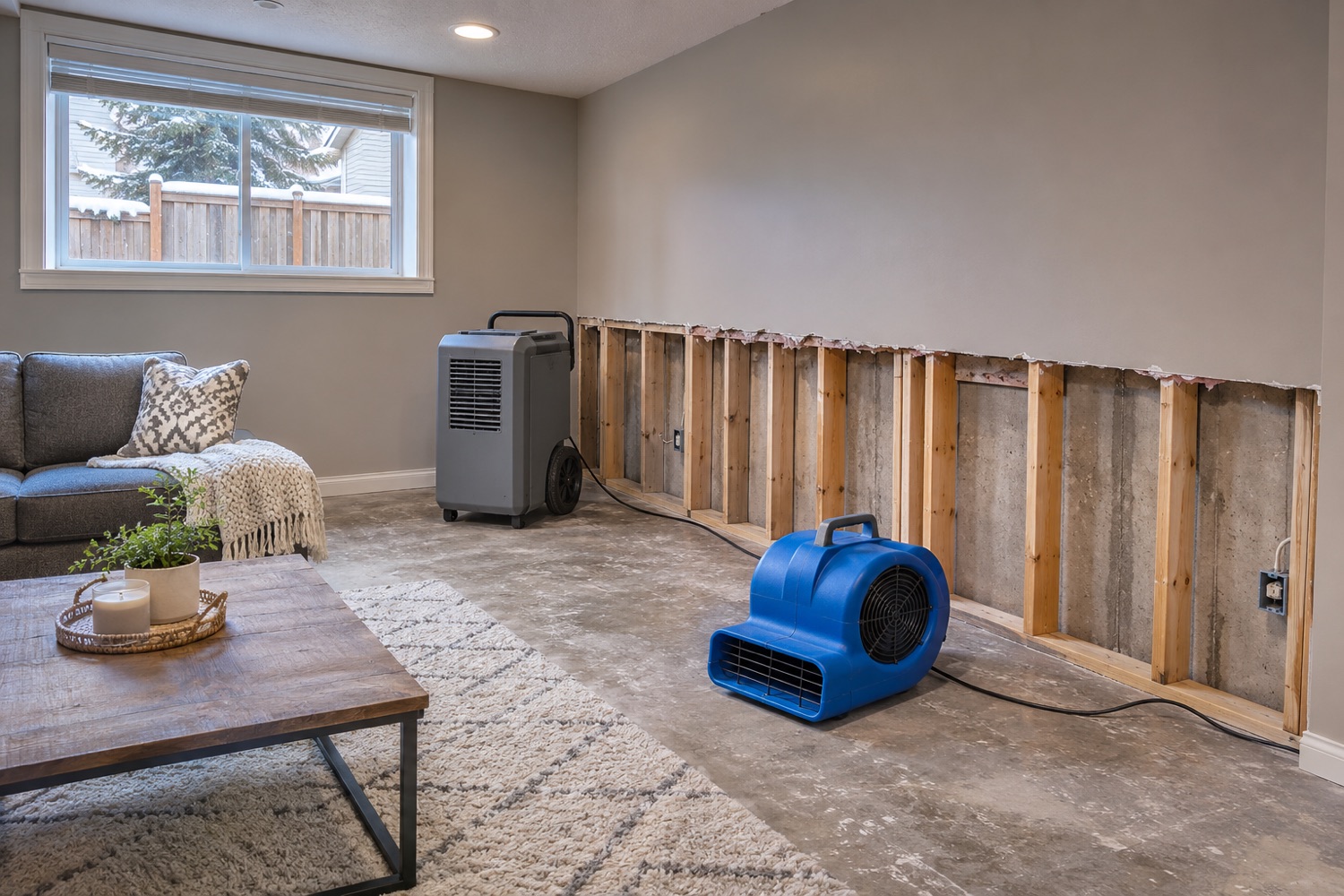
Once a finished basement has been pumped out, the change can be dramatic. You can see the floor again, the worst of the mess is gone, and it feels as though you should be able to order new flooring. The parts of the room that determine whether you can rebuild are harder to see. The back of the drywall, the bottom plate of a framed wall and the subfloor can still be wet long after the exposed concrete has dried.
For a homeowner, the useful question is what has to happen between emergency cleanup and the day a contractor closes the walls. A clear answer can prevent repeat demolition, help you compare repair scopes and give you time to address whatever let the water in.
Establish what entered the room and where it travelled
Start with what you know about the water. Did it come through a window during heavy rain, appear at the floor drain, follow a burst pipe or seep through a joint where the floor meets the foundation? The source influences the contamination assessment, the materials a crew can clean and how the repairs should be sequenced. Where the cause is unclear, describe the observations and let a qualified professional investigate. Water that looks clear can still carry contaminants after travelling through soil, drains or wet building materials.
Map the affected area beyond the obvious puddle. Water can travel under a floating floor, find gaps under interior partitions or collect in a closet on the other side of a wall. Stair landings, built-in cabinets and closets sometimes need a separate inspection because the visible face dries while a concealed layer holds moisture. Share the earliest photos with the restoration team. A wide photo of a wet hallway can show a route that has disappeared by the time a crew arrives.
Confirm that the affected area can be entered
Stay out if power may still be on in a flooded area, the water may contain sewage, the structure shows signs of damage or officials have told you to stay away. Have the appropriate trades assess affected wiring, outlets, appliances or gas equipment before anyone uses them again. A basement doorway or dry upper landing can be a safer place to describe what you see. Do not go into water to reach a breaker or retrieve documentation.
Follow local guidance on returning home after a widespread event. When you contact a flood restoration company for an assessment, give them the property address, when you first noticed the water and any current access restrictions. These details help the crew plan the visit, particularly when several properties have reported damage after the same weather system.
Separate emergency mitigation from rebuilding
Emergency mitigation puts a stop to avoidable damage. It can include extracting water, moving affected contents, removing materials that cannot be salvaged, cleaning and drying the parts of the structure that will stay. Rebuilding returns the space to use with work such as replacing insulation, drywall, flooring and trim. These phases can overlap in planning. The physical work still has to follow the conditions in each room.
Ask for a scope that identifies what stays, what goes and what still needs inspection. “Replace basement flooring” gives a contractor very little to work with. “Inspect the subfloor under the hallway and bedroom, and replace the affected floor assembly after the substrate meets installation requirements” makes the dependency clear. The same principle applies to wall repairs. A cosmetic patch and a wall that needs insulation, vapour control and new drywall are different jobs, even when the patch sizes look similar from across the room.
Before any materials come out, confirm how your insurer wants damage documented and how the restoration contractor plans to record removal. Where a hazard is present, let the service team coordinate urgent work from a safe position. A photo log and an itemized scope tend to be more useful than a pile of damaged materials with no record of where they came from.
Ask how drying will be checked
A damp smell, soft trim or dark marks can signal a problem. The absence of those signs cannot tell you whether the wall cavity, insulation or underside of the subfloor is ready for repair. Ask the restoration team what materials they are checking, which locations they are measuring and how they decide that readings are acceptable. A similar, unaffected material can provide context. A flooring manufacturer may also call for a particular substrate test before the new floor goes down.
Request a dated record of the readings that informed the decision to stop drying. Useful notes identify a location somebody else can find later, such as the lower plate on the north bedroom wall or the slab beneath the former laundry threshold. If the original readings are unavailable, a current record can still describe where the final checks took place. Ask for clarification about any inaccessible space, particularly around built-ins, stairs and finished foundation walls.
Crews may adjust equipment or open an additional section when readings show the room is drying unevenly. This is one reason to avoid promising a painter or flooring installer a fixed date too early. Give them a window and a condition for release so they can anticipate the job without pressure to cover an area prematurely.
Resolve the water path before closing it in
Ask which issue needs to be repaired, who owns that repair and what evidence will show that it is complete. This may involve a plumber tracing a pipe failure, a drainage contractor correcting a runoff route or a foundation specialist assessing recurring seepage. The fact that the basement dries in a stretch of good weather does not settle what will happen the next time rain falls on the same wall. Keep the cause investigation and drying records together so one trade can see what the previous trade observed.
Think about access during rebuilding. A removable panel can make it easier to check a backwater valve, sump or plumbing shutoff if these are already part of the room. Relocating cardboard storage away from the floor gives the next inspection a better chance of catching a leak early. Discuss changes to drainage, plumbing, structure and electrical systems with qualified trades before committing to a layout. Where the home is in a mapped flood hazard area, check current local requirements for the address before expanding the finished basement.
Use a short handoff checklist before ordering finishes
- Record the cause or the remaining investigation and confirm who is responsible for correcting it.
- Confirm which materials were removed, which were cleaned and whether any inaccessible area still needs inspection.
- Get drying records for the materials that will be covered. Confirm any separate testing required by the flooring or coating installer.
- Check that affected electrical, heating, gas or other equipment has been assessed by the appropriate qualified trade.
- Review the repair scope room by room, including walls, trim, transitions, cabinetry and contents that need to go back.
- Keep photos, estimates, drying records, repair approvals and invoices in a single folder for future reference.
The handoff is a good time to settle small details with large scheduling effects. If a flooring run extends into an unaffected hallway, for example, decide how to handle the edge of the repair before materials are ordered. If the laundry needs to stay available, agree on how it will be disconnected and returned to service. If a section of wall needs further access for a trade, tell the drywaller where to stop. Those decisions can be documented on an annotated floor plan, even a simple sketch with room labels.
What if the room looks fine after a few days?
A room may appear usable again while water remains beneath flooring or behind a wall. Check with your restoration contact before moving belongings back or replacing finishes if the water reached more than the visible surface. Share any new changes, such as an odour when a closet is opened, a plank edge lifting or moisture appearing after rain. These observations can narrow the area that needs another check. Health Canada's flood cleanup guidance explains why prompt, complete cleanup matters for indoor air quality.
When the source is addressed, the materials that will stay have been checked and the repair crew knows which areas are ready, rebuilding becomes easier to plan. Keep the drying and repair records after the job, particularly if water arrived during a storm or through a route that could recur. At the next heavy rain or thaw, those records give you a specific place to check from a safe location, and a starting point if you need to call for help.
Easy steps to create a color palette
Lorem ipsum dolor sit amet, consectetur adipiscing elit lobortis arcu enim urna adipiscing praesent velit viverra sit semper lorem eu cursus vel hendrerit elementum morbi curabitur etiam nibh justo, lorem aliquet donec sed sit mi dignissim at ante massa mattis.
- Neque sodales ut etiam sit amet nisl purus non tellus orci ac auctor
- Adipiscing elit ut aliquam purus sit amet viverra suspendisse potent
- Mauris commodo quis imperdiet massa tincidunt nunc pulvinar
- Excepteur sint occaecat cupidatat non proident sunt in culpa qui officia
What is a color palette?
Vitae congue eu consequat ac felis placerat vestibulum lectus mauris ultrices cursus sit amet dictum sit amet justo donec enim diam porttitor lacus luctus accumsan tortor posuere praesent tristique magna sit amet purus gravida quis blandit turpis.

Don’t overspend on growth marketing without good retention rates
At risus viverra adipiscing at in tellus integer feugiat nisl pretium fusce id velit ut tortor sagittis orci a scelerisque purus semper eget at lectus urna duis convallis porta nibh venenatis cras sed felis eget neque laoreet suspendisse interdum consectetur libero id faucibus nisl donec pretium vulputate sapien nec sagittis aliquam nunc lobortis mattis aliquam faucibus purus in.
- Neque sodales ut etiam sit amet nisl purus non tellus orci ac auctor
- Adipiscing elit ut aliquam purus sit amet viverra suspendisse potenti
- Mauris commodo quis imperdiet massa tincidunt nunc pulvinar
- Adipiscing elit ut aliquam purus sit amet viverra suspendisse potenti
What’s the ideal customer retention rate?
Nisi quis eleifend quam adipiscing vitae aliquet bibendum enim facilisis gravida neque euismod in pellentesque massa placerat volutpat lacus laoreet non curabitur gravida odio aenean sed adipiscing diam donec adipiscing tristique risus amet est placerat in egestas erat.
“Lorem ipsum dolor sit amet consectetur adipiscing elit, sed do eiusmod tempor incididunt ut labore et dolore magna aliqua enim ad minim veniam.”
Next steps to increase your customer retention
Eget lorem dolor sed viverra ipsum nunc aliquet bibendum felis donec et odio pellentesque diam volutpat commodo sed egestas aliquam sem fringilla ut morbi tincidunt augue interdum velit euismod eu tincidunt tortor aliquam nulla facilisi aenean sed adipiscing diam donec adipiscing ut lectus arcu bibendum at varius vel pharetra nibh venenatis cras sed felis eget.