A plumbing leak in a commercial building can interrupt work long before the repair is complicated. Staff need a safe route, tenants need clear information, inventory may need protection and several contractors may require access at once. The person coordinating the response must manage those practical needs while the source is controlled and the water damage is assessed.
A useful plan separates urgent decisions from later reopening decisions. You do not need a final reconstruction estimate before calling for help, and you should not promise a reopening time before the affected space has been assessed. This guide explains how a manager can organize emergency plumbing and restoration as one coordinated response.
Set a clear safety boundary first
Start with the people in the building. Keep staff, customers and visitors out of the affected area and maintain an accessible exit route. If water reaches electrical equipment, a ceiling becomes unstable or another immediate danger develops, contact the appropriate emergency service or utility. Ordinary business needs do not override a hazard assessment.
Do not ask an employee to walk through water to unplug equipment, reach a panel or retrieve stock. Record the concern and tell the responders. The CDC's water-damage safety guidance warns against operating electrical equipment while standing in water and calls for qualified electrical checks before affected systems return to use. The underlying hazard applies to workplaces as well as homes.
Identify the safe routes that remain. A temporary restriction should be understandable to someone arriving for a later shift, not only to the people who saw the leak. Use the building's established emergency procedures and ask the response team how its equipment and barriers will affect access.
Choose one incident lead and one contact number
Someone needs to receive updates, approve access and maintain the incident record. In a small business, that may be the owner. In a managed property, it may be the building manager or a designated facilities lead. Make that responsibility explicit so several people do not issue conflicting directions.
Give the plumber, restoration contractor and any electrical or building specialists the same contact information. Identify a backup contact for shift changes. Tell the team who can authorize work and which decisions require a separate owner, insurer or management approval.
The incident lead should collect information without trying to perform every trade's assessment. Their job is to connect the repair, damage review, occupant communication and reopening requirements. A single organized record helps the professionals work from the same understanding of what happened.
Describe the plumbing problem in operating terms
When making the call, explain where water is entering and which building operations are affected. A leaking line over stock shelving, a backed-up washroom and a release in a mechanical room require different access plans. Include whether water is still flowing, whether a shutoff has been used and whether the source is uncertain.
If a plumbing failure requires urgent repair, arrange a 24/7 emergency plumber and explain the property's use. Ask what occupants should stop using and which connected systems may be unavailable. Confirm the provider's service area, access requirements and the scope of the emergency visit.
Do not direct staff to experiment with fixtures while a drain backup or unexplained release is active. Pass along earlier observations, such as repeated slow drainage or a prior stain, without presenting them as a diagnosis. The plumber can use that information in the investigation.
Arrange the restoration response while source control proceeds
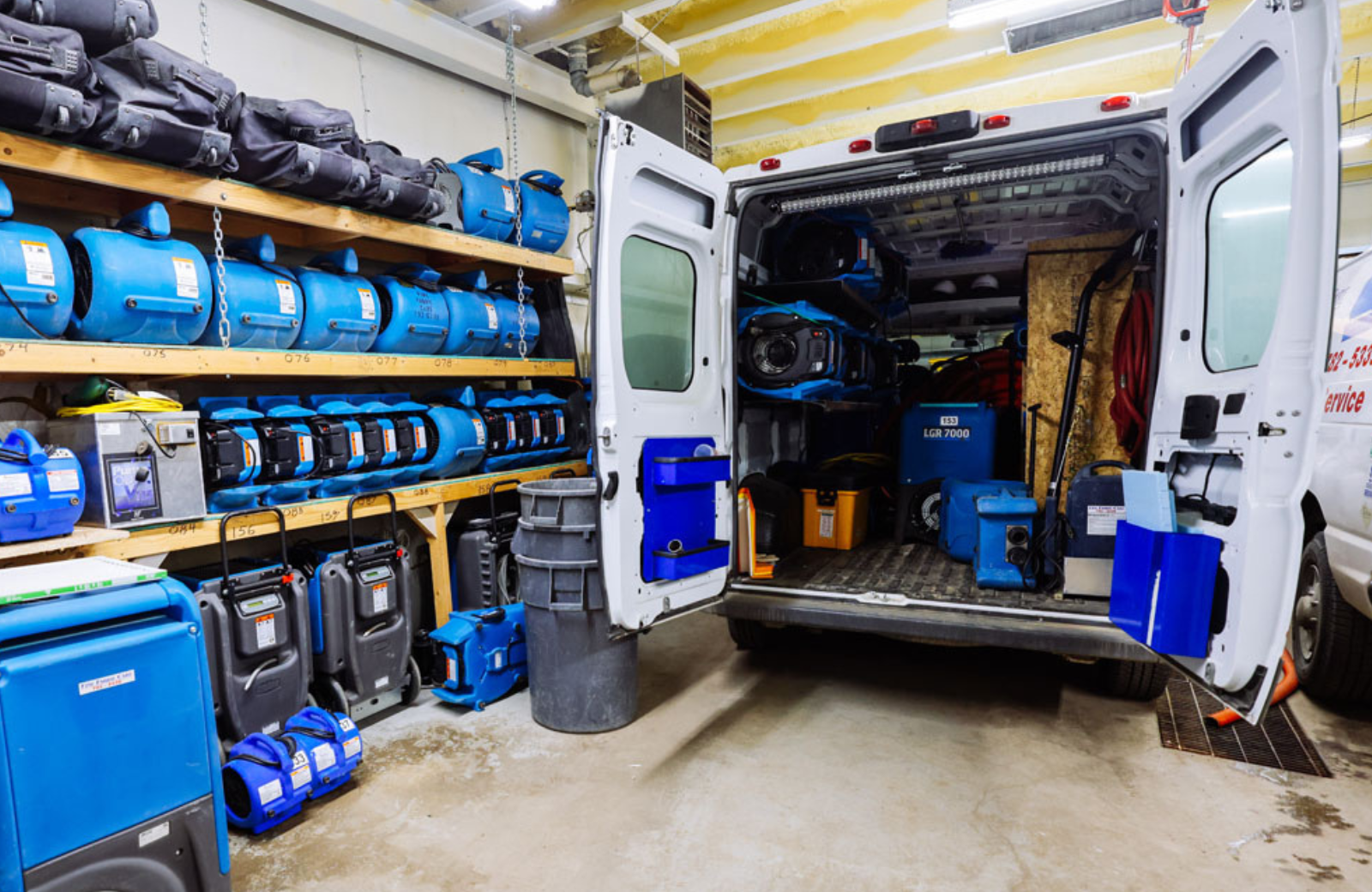
The water already released may be affecting more than the plumbing repair area. Contact the restoration team with the incident description and the location of the source. Explain whether the plumber is on site, on the way or still being arranged so the visits can be coordinated.
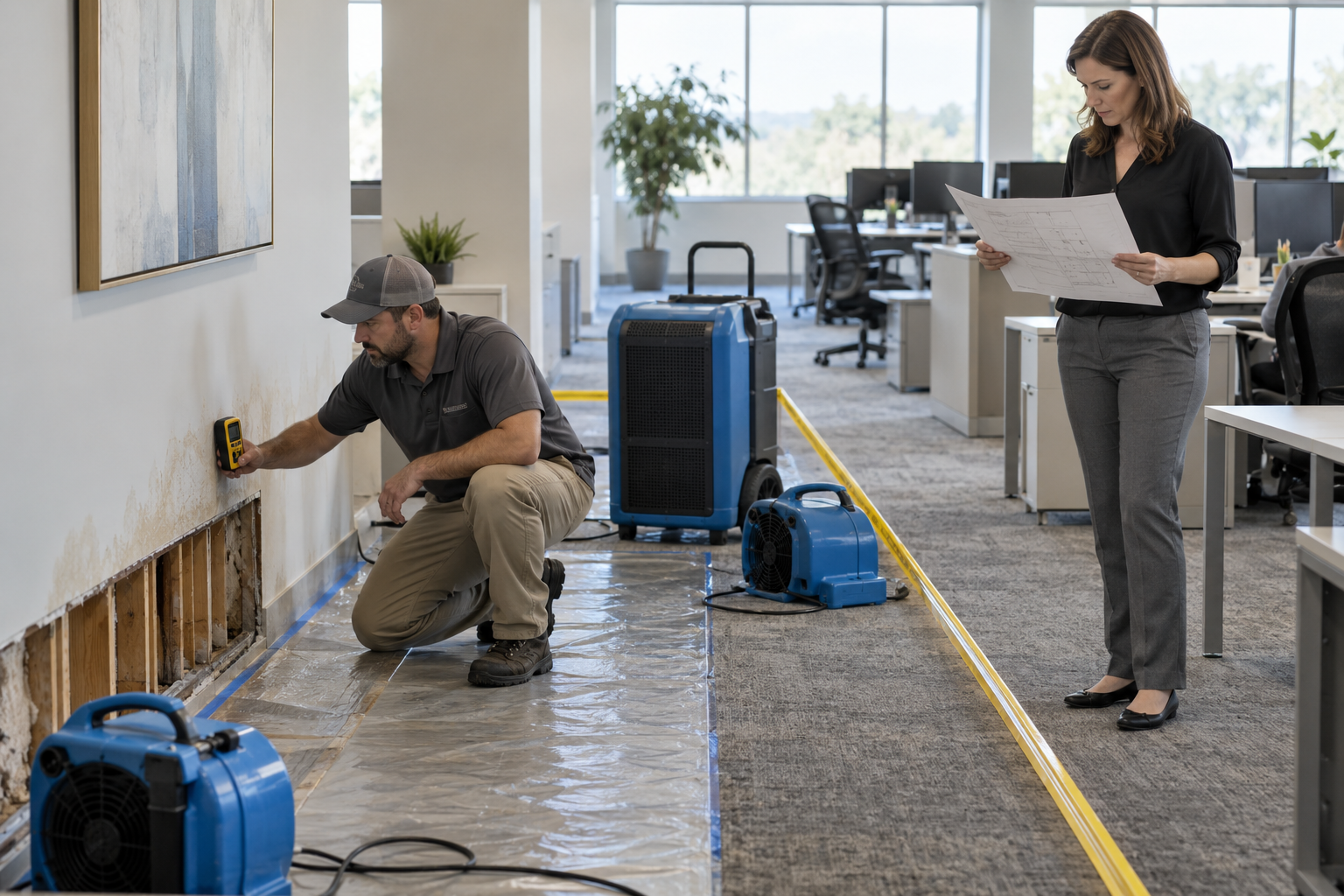
Calgary Restoration provides water damage and flood restoration services for affected properties. For a business loss, ask how the assessment will account for adjoining units, concealed spaces, equipment rooms and occupied areas. A commercial response needs a map of the affected boundary, not merely a list of rooms with visible puddles.
Ask who will confirm that the source is controlled. That message should reach the restoration lead and the incident coordinator. If a repair is temporary or another plumbing visit is required, include that fact in the recovery plan rather than letting everyone assume the source work is finished.
Prioritize contents through a documented plan
Businesses may have equipment, documents, stock and customer property near the wet area. Tell the restoration contractor which items are especially important and whether there are handling restrictions. Do not make employees enter a restricted area to move them before safe access is established.
Create an inventory with location names, item descriptions and photographs where safe. Keep unaffected goods separate from affected goods during any relocation. If a product's condition has not been evaluated, do not return it to normal stock simply because the packaging looks dry.
For documents or specialty equipment, ask whether a relevant recovery specialist is needed. Avoid general promises that all contents can be saved. The decision depends on what happened to each item, the source of the water and the requirements for its future use.
Build a record that supports several readers
Your incident file may later be used by the owner, maintenance team, contractors and insurer. Begin with a timeline: discovery, occupant restrictions, calls, source-control actions and contractor attendance. State which times are known and which are estimates.
Include photographs of the source, the visible water path and affected rooms. Add a simple floor plan with room names that match the photograph labels. Record areas that could not be inspected during the first visit and who will arrange access to them.
Keep the plumbing repair description, restoration scope, drying records and work approvals together. Provide information to the insurer through the agreed claim process. Accurate documentation supports review, but it does not guarantee coverage, a payment amount or a reopening decision.
Ask how work will be staged around operations
Some properties can keep unaffected areas in use, while others require a wider restriction. Ask the professionals what makes a separation workable in your building. Access, contamination concerns, electrical conditions and the work itself may prevent the business from operating as usual.
Discuss deliveries, shift changes, tenants and customer access before equipment is placed. A clear schedule helps avoid someone unplugging a machine for another task or blocking a route needed by the contractors. If a business activity conflicts with the recovery plan, bring it to the incident lead for resolution.
Agree on the timing and format of updates. A short daily note can state what was assessed, which areas remain restricted and what the next decision depends on. It should not replace a technical report, but it gives staff a consistent way to understand the current situation.
Make drying and cleaning checkpoints explicit
Ask which materials are being monitored and how the team will determine that recovery goals have been met. Equipment operation alone is not the completion criterion. The contractor should explain the observations or readings that support moving to the next stage.
The EPA's guidance for schools and commercial buildings treats moisture control and appropriate remediation planning as central to recovery. For a specific incident, the assessment still needs to address the building materials and actual conditions rather than apply a universal drying schedule.
If suspected sewage, mould or another contamination concern is involved, tell the team immediately and ask how restrictions and handling will change. Do not run ordinary workplace cleaning routines through the affected zone before the contractor has explained the plan.
Keep the reopening decision separate from the repair invoice
A completed plumbing invoice establishes the reported plumbing work; it does not by itself establish that an occupied space is ready to reopen. Reopening may also depend on drying, cleaning, electrical assessment, finish repairs and any requirements applicable to the property's use.
Make a closeout checklist with the responsible person for each item. It might include the repaired source, the final drying record, restored access routes, completed cleaning and the return of moved equipment. Use the actual requirements identified for the building rather than a generic assurance that everything is ready.
Communicate the approved scope of reopening. If one room remains restricted, say so plainly to occupants and contractors. A staged return to use should have clear boundaries, especially when another shift or tenant will arrive after the incident lead leaves.
Give reconstruction trades the information they need
Before damaged finishes are replaced, provide the reconstruction contractor with the completed source-repair information and the recovery record for the affected assembly. Ask what must be confirmed before walls, ceilings or flooring are closed. This avoids relying on appearance alone.
Assign the remaining tasks clearly. Who replaces cabinets? Who reconnects a fixture after finish work? Who handles final cleaning and returns moved stock? A short list with names and dates prevents a small gap from delaying an otherwise completed recovery.
Retain the closeout documents in the building maintenance record. A future technician should be able to identify the repaired component and the area previously affected by water. That context is helpful when a new stain appears or when another project opens the same space.
Review the incident before normal routines take over
Once the space is stable, review the response with the building team. Did the first employee know whom to call? Was the appropriate shutoff accessible? Were access keys and contractor entry instructions available after hours? Were occupants given one consistent update?
Ask the plumber which maintenance recommendations follow from the actual cause. Ask the restoration team whether any monitoring or follow-up is appropriate for the affected materials. Record the recommendations and assign ownership rather than leave them in a conversation that everyone remembers differently.
Commercial water damage is easier to manage when source control, restoration and operational decisions are connected. For water already affecting the property, Calgary Restoration can discuss assessment and recovery needs. A clear incident lead, a reliable record and evidence-based handoffs help the business move from emergency response to a controlled return to use.
Easy steps to create a color palette
Lorem ipsum dolor sit amet, consectetur adipiscing elit lobortis arcu enim urna adipiscing praesent velit viverra sit semper lorem eu cursus vel hendrerit elementum morbi curabitur etiam nibh justo, lorem aliquet donec sed sit mi dignissim at ante massa mattis.
- Neque sodales ut etiam sit amet nisl purus non tellus orci ac auctor
- Adipiscing elit ut aliquam purus sit amet viverra suspendisse potent
- Mauris commodo quis imperdiet massa tincidunt nunc pulvinar
- Excepteur sint occaecat cupidatat non proident sunt in culpa qui officia
What is a color palette?
Vitae congue eu consequat ac felis placerat vestibulum lectus mauris ultrices cursus sit amet dictum sit amet justo donec enim diam porttitor lacus luctus accumsan tortor posuere praesent tristique magna sit amet purus gravida quis blandit turpis.

Don’t overspend on growth marketing without good retention rates
At risus viverra adipiscing at in tellus integer feugiat nisl pretium fusce id velit ut tortor sagittis orci a scelerisque purus semper eget at lectus urna duis convallis porta nibh venenatis cras sed felis eget neque laoreet suspendisse interdum consectetur libero id faucibus nisl donec pretium vulputate sapien nec sagittis aliquam nunc lobortis mattis aliquam faucibus purus in.
- Neque sodales ut etiam sit amet nisl purus non tellus orci ac auctor
- Adipiscing elit ut aliquam purus sit amet viverra suspendisse potenti
- Mauris commodo quis imperdiet massa tincidunt nunc pulvinar
- Adipiscing elit ut aliquam purus sit amet viverra suspendisse potenti
What’s the ideal customer retention rate?
Nisi quis eleifend quam adipiscing vitae aliquet bibendum enim facilisis gravida neque euismod in pellentesque massa placerat volutpat lacus laoreet non curabitur gravida odio aenean sed adipiscing diam donec adipiscing tristique risus amet est placerat in egestas erat.
“Lorem ipsum dolor sit amet consectetur adipiscing elit, sed do eiusmod tempor incididunt ut labore et dolore magna aliqua enim ad minim veniam.”
Next steps to increase your customer retention
Eget lorem dolor sed viverra ipsum nunc aliquet bibendum felis donec et odio pellentesque diam volutpat commodo sed egestas aliquam sem fringilla ut morbi tincidunt augue interdum velit euismod eu tincidunt tortor aliquam nulla facilisi aenean sed adipiscing diam donec adipiscing ut lectus arcu bibendum at varius vel pharetra nibh venenatis cras sed felis eget.