Water Damage Restoration in Calgary: What to Expect
Water damage restoration in Calgary follows a proven sequence: emergency water extraction, structural drying, moisture monitoring, and reconstruction — typically completed within 3–14 days depending on severity. Acting within the first 24–48 hours is critical to preventing mold growth and limiting structural damage.
Quick Answer:Calgary water damage restoration costs between $2,000 and $15,000 CAD depending on the category of water (clean, grey, or black), the area affected, and whether mold develops. A certified IICRC S500-trained crew typically completes the drying phase in 3–5 days, with full reconstruction taking up to two weeks.
Why Calgary Homes Are Especially Vulnerable
Calgary's climate and soil conditions create specific water damage risks that homeowners should understand before a crisis happens.
- Freeze-thaw cycles — Pipes in exterior walls and mechanical rooms are at high risk of bursting during Calgary's rapid temperature swings, especially in January and February.
- Clay-heavy soil — Much of Calgary sits on expansive clay soils that shift with moisture, putting pressure on foundation walls and increasing the risk of basement seepage.
- Spring snowmelt — Rapid snowmelt overwhelms drainage systems in neighbourhoods like Bowness, Sunnyside, and Inglewood, which sit near the Bow River floodplain.
- Aging infrastructure — Older Calgary neighbourhoods (pre-1980 construction) often have clay tile sewer laterals that are prone to root intrusion and backflow during heavy rain events.
- Finished basements — The majority of Calgary homes have finished basements, meaning water intrusion quickly damages drywall, flooring, and personal belongings rather than just concrete.
The 5 Phases of Water Damage Restoration
Phase 1: Emergency Response and Water Extraction
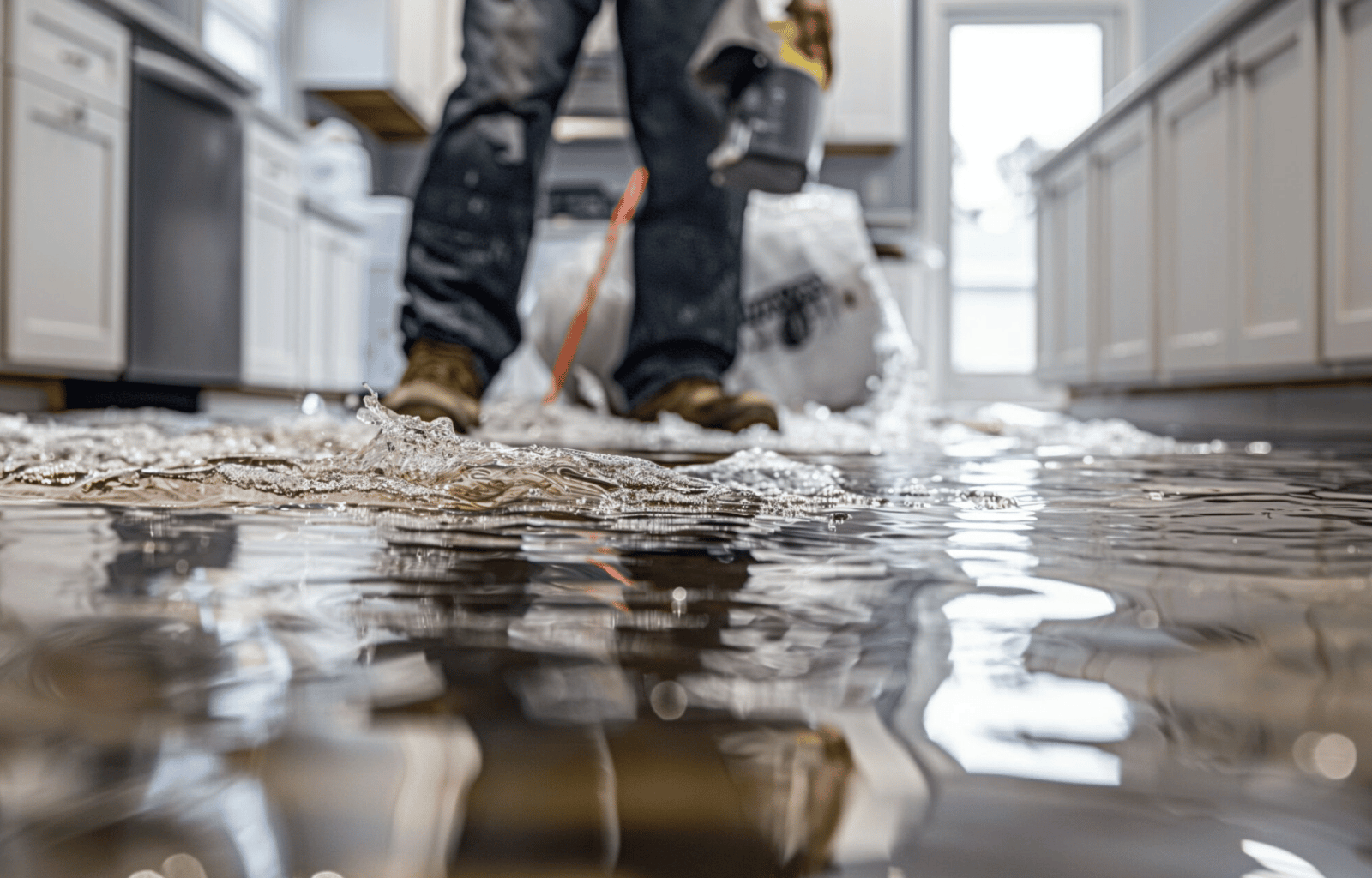
A certified crew arrives — typically within 1–2 hours for emergency calls — and immediately begins removing standing water using truck-mounted or portable extraction units. The priority is stopping active water intrusion, then removing as much bulk water as possible before structural drying begins.
- Shut off the water source (main valve or specific supply line)
- Remove standing water with industrial extractors
- Document all affected areas with photos for insurance purposes
- Classify the water: Category 1 (clean/burst pipe), Category 2 (grey water), or Category 3 (black water/sewage)
Phase 2: Structural Drying and Dehumidification
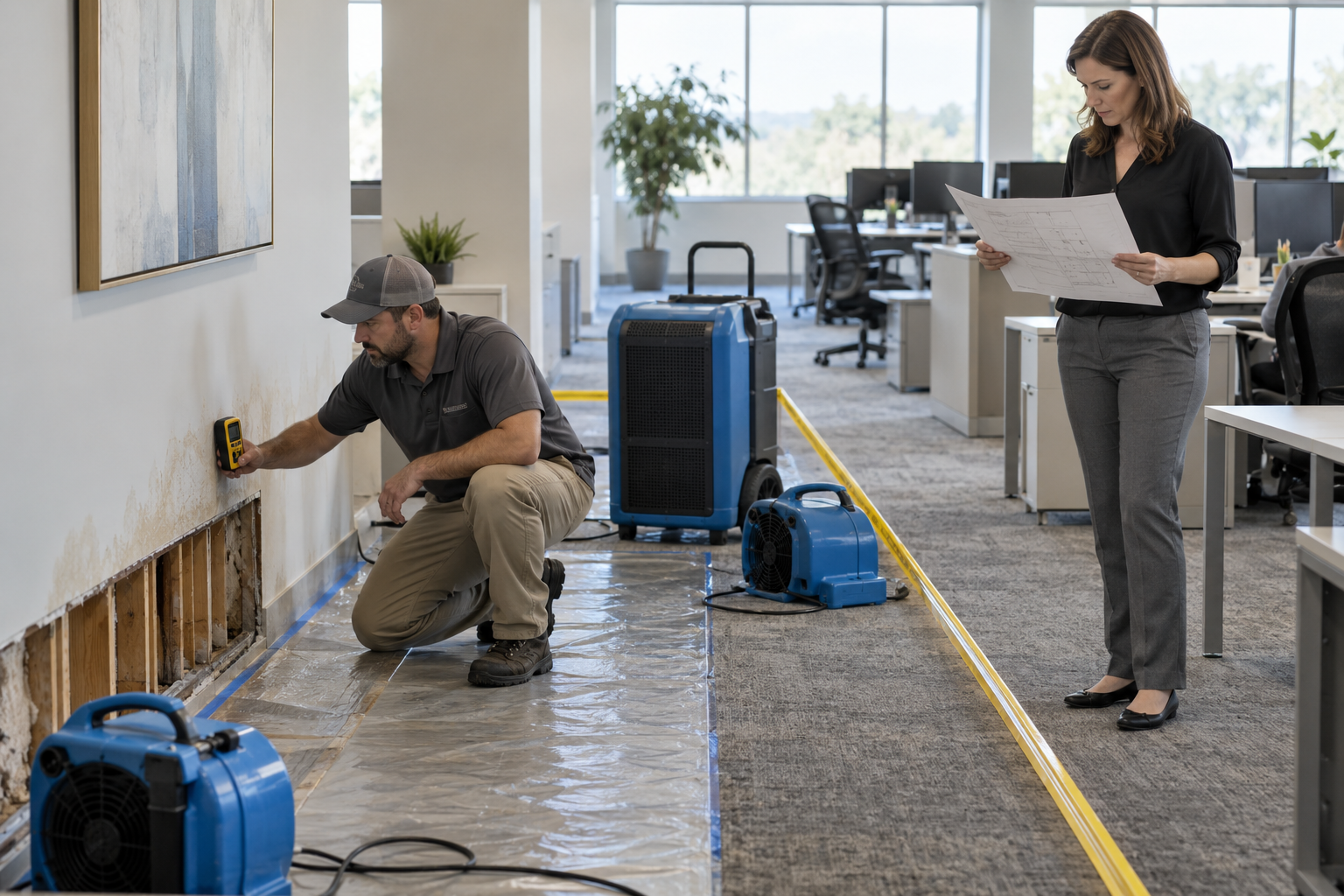
After extraction, the real work begins. Water that has absorbed into drywall, subfloor, framing, and insulation cannot be vacuumed out — it must be evaporated and captured using air movers and commercial dehumidifiers.
- Air movers (high-velocity fans) increase evaporation from surfaces
- Commercial dehumidifiers capture moisture from the air
- Drying typically runs 3–5 days, with readings taken daily
- IICRC S500 standards define target moisture levels for each material class
- Thermal imaging cameras locate hidden moisture inside walls and under floors
Phase 3: Moisture Monitoring and Documentation
Technicians return daily to check moisture readings with calibrated meters. Drying equipment is adjusted or moved as moisture migrates through materials. A complete drying log is maintained — this documentation is essential for insurance claims.
Phase 4: Mold Prevention and Remediation
If drying begins within 24–48 hours, mold growth can usually be prevented. If water sat longer, or if the home had pre-existing moisture issues, antimicrobial treatments and potentially full mold remediation will be required before any reconstruction begins.
- Mold can begin colonizing porous materials within 24–48 hours in warm conditions
- Visible mold on drywall almost always means mold behind the drywall as well
- IICRC S520 governs professional mold remediation standards
- Affected drywall and insulation is removed and bagged before reconstruction
Phase 5: Reconstruction
Once the structure is fully dry and any mold has been addressed, reconstruction restores your home to pre-loss condition. This includes replacing drywall, insulation, flooring, trim, and painting.
Quick Answer:Most Calgary homeowners can expect the full restoration process — from emergency extraction through reconstruction — to take 7–21 days. The drying phase alone takes 3–5 days regardless of how fast crews work; moisture cannot be rushed out of structural materials.
Water Damage Cost Ranges in Calgary
| Damage Scenario | Typical Cost (CAD) | Timeline |
|---|---|---|
| Small burst pipe, limited area | $2,000 – $4,000 | 3–5 days drying + reconstruction |
| Flooded basement (clean water) | $4,000 – $8,000 | 5–10 days total |
| Sewage backup with contamination | $5,000 – $12,000 | 7–14 days total |
| Major flood with mold growth | $8,000 – $15,000+ | 14–21 days total |
Costs vary based on the square footage affected, the category of water contamination, whether mold develops, and the extent of reconstruction required. Most Alberta home insurance policies cover sudden and accidental water damage from burst pipes, though overland flooding and sewer backup typically require separate endorsements.
DIY vs. Professional Water Damage Restoration
| Factor | DIY Approach | Professional Restoration |
|---|---|---|
| Equipment | Consumer fans and dehumidifiers | Industrial-grade air movers and dehumidifiers |
| Moisture detection | Visual inspection only | Calibrated meters + thermal imaging |
| Drying speed | 7–14 days (higher mold risk) | 3–5 days (lower mold risk) |
| Documentation | None for insurance | Full drying log for insurance claims |
| Mold risk | High if drying is incomplete | Low when IICRC protocols followed |
| Insurance acceptance | Often disputed without documentation | Supported with certified documentation |
What to Do in the First Hour After Water Damage
- Shut off the water source — Find your main shutoff valve (usually near the water meter) or the supply valve for the affected fixture.
- Cut power to affected areas — Do not enter a flooded basement if electrical panels, outlets, or appliances are submerged.
- Call a certified restoration company — Look for IICRC certification and 24/7 emergency response. Request an ETA in writing.
- Document everything — Photograph water levels, affected materials, and all damage before any cleanup begins.
- Contact your insurance company — Start your claim early; adjusters often need to visit before work begins, though emergency extraction should not be delayed.
- Move salvageable items — Remove furniture, electronics, and valuables from the affected area if it is safe to do so.
Insurance Claims for Water Damage in Calgary
Most Alberta home insurance policies cover sudden and accidental water damage — such as a burst pipe or appliance failure — under the standard dwelling coverage. What's typically NOT covered without add-ons:
- Overland flooding (requires a separate overland water endorsement)
- Sewer and drain backup (requires a separate sewer backup endorsement)
- Gradual leaks or maintenance-related damage (owner negligence exclusions)
- Damage that occurred while the home was unoccupied for more than 30 days
A certified restoration company will provide moisture readings, scope of work documentation, and a full drying log to support your claim. This documentation significantly reduces disputes with adjusters. Learn more about the full water damage restoration process and how to navigate insurance claims.
How to Choose a Restoration Company in Calgary
Not all restoration companies operating in Calgary hold the same credentials. When evaluating options after water damage, prioritize these qualifications:
- IICRC certification — The Institute of Inspection, Cleaning and Restoration Certification is the industry standard. Look for WRT (Water Restoration Technician) certified staff.
- 24/7 emergency availability — Water damage doesn't follow business hours. Confirm the company can deploy a crew within 1–2 hours.
- Direct insurance billing — Reputable companies will bill your insurer directly and handle supplemental claims on your behalf.
- Written scope of work — Avoid any company that won't provide a detailed written estimate before starting work.
- Local Calgary presence — A local company will arrive faster and understands Calgary-specific building practices and code requirements.
See our full guide on how to choose restoration companies in Calgary for a complete vetting checklist.
Frequently Asked Questions
How long does water damage restoration take in Calgary?
The drying phase typically takes 3–5 days using professional equipment. Full restoration including reconstruction usually takes 7–21 days depending on the extent of damage, whether mold is present, and reconstruction complexity.
Does Alberta home insurance cover water damage?
Standard Alberta home insurance covers sudden and accidental water damage from burst pipes and appliance failures. Overland flooding and sewer backup require separate endorsements, which are strongly recommended given Calgary's flood history.
Can I dry out water damage myself?
Consumer fans and dehumidifiers cannot match the drying speed of industrial equipment. Slower drying significantly increases mold risk, and without calibrated moisture meters, you can't confirm walls and subfloors are actually dry. DIY attempts also lack the documentation insurers require.
How much does water damage restoration cost in Calgary?
Costs range from $2,000–$4,000 for minor burst pipe incidents to $8,000–$15,000+ for major floods with mold involvement. The category of water contamination and extent of reconstruction are the biggest cost drivers.
What happens if water damage is not treated quickly?
Mold can begin growing within 24–48 hours on wet drywall and framing. Structural materials weaken over time with sustained moisture. Costs escalate significantly the longer water sits — what starts as a $3,000 drying job can become a $10,000+ remediation and rebuild.
Do restoration companies work directly with insurance in Calgary?
Most certified Calgary restoration companies offer direct insurance billing and will communicate with your adjuster on your behalf. They provide the moisture documentation and scope of work that supports your claim and reduces disputes.
What is the difference between water mitigation and water restoration?
Mitigation refers to stopping further damage — extraction, drying, and preventing mold. Restoration refers to returning the property to its pre-loss condition through reconstruction. Both phases are typically handled by the same company. Learn more about our emergency restoration services and flood damage cleanup process.
Easy steps to create a color palette
Lorem ipsum dolor sit amet, consectetur adipiscing elit lobortis arcu enim urna adipiscing praesent velit viverra sit semper lorem eu cursus vel hendrerit elementum morbi curabitur etiam nibh justo, lorem aliquet donec sed sit mi dignissim at ante massa mattis.
- Neque sodales ut etiam sit amet nisl purus non tellus orci ac auctor
- Adipiscing elit ut aliquam purus sit amet viverra suspendisse potent
- Mauris commodo quis imperdiet massa tincidunt nunc pulvinar
- Excepteur sint occaecat cupidatat non proident sunt in culpa qui officia
What is a color palette?
Vitae congue eu consequat ac felis placerat vestibulum lectus mauris ultrices cursus sit amet dictum sit amet justo donec enim diam porttitor lacus luctus accumsan tortor posuere praesent tristique magna sit amet purus gravida quis blandit turpis.

Don’t overspend on growth marketing without good retention rates
At risus viverra adipiscing at in tellus integer feugiat nisl pretium fusce id velit ut tortor sagittis orci a scelerisque purus semper eget at lectus urna duis convallis porta nibh venenatis cras sed felis eget neque laoreet suspendisse interdum consectetur libero id faucibus nisl donec pretium vulputate sapien nec sagittis aliquam nunc lobortis mattis aliquam faucibus purus in.
- Neque sodales ut etiam sit amet nisl purus non tellus orci ac auctor
- Adipiscing elit ut aliquam purus sit amet viverra suspendisse potenti
- Mauris commodo quis imperdiet massa tincidunt nunc pulvinar
- Adipiscing elit ut aliquam purus sit amet viverra suspendisse potenti
What’s the ideal customer retention rate?
Nisi quis eleifend quam adipiscing vitae aliquet bibendum enim facilisis gravida neque euismod in pellentesque massa placerat volutpat lacus laoreet non curabitur gravida odio aenean sed adipiscing diam donec adipiscing tristique risus amet est placerat in egestas erat.
“Lorem ipsum dolor sit amet consectetur adipiscing elit, sed do eiusmod tempor incididunt ut labore et dolore magna aliqua enim ad minim veniam.”
Next steps to increase your customer retention
Eget lorem dolor sed viverra ipsum nunc aliquet bibendum felis donec et odio pellentesque diam volutpat commodo sed egestas aliquam sem fringilla ut morbi tincidunt augue interdum velit euismod eu tincidunt tortor aliquam nulla facilisi aenean sed adipiscing diam donec adipiscing ut lectus arcu bibendum at varius vel pharetra nibh venenatis cras sed felis eget.