What Water Restoration Companies Actually Do
Water restoration companies provide emergency water extraction, structural drying, moisture monitoring, mold prevention, and full reconstruction after water damage events — following the IICRC S500 standard from the first hour of response through the final rebuild. Understanding exactly what each phase involves helps you evaluate quotes, set realistic expectations, and hold your company accountable.
Quick Answer:Water restoration companies do far more than remove standing water. They assess moisture levels throughout the structure, deploy industrial drying equipment for 3–5 days, prevent mold growth, handle insurance documentation, and rebuild damaged areas to pre-loss condition. The process typically takes 7–21 days from start to finish.
The Core Services Water Restoration Companies Provide
1. Emergency Response and Water Extraction
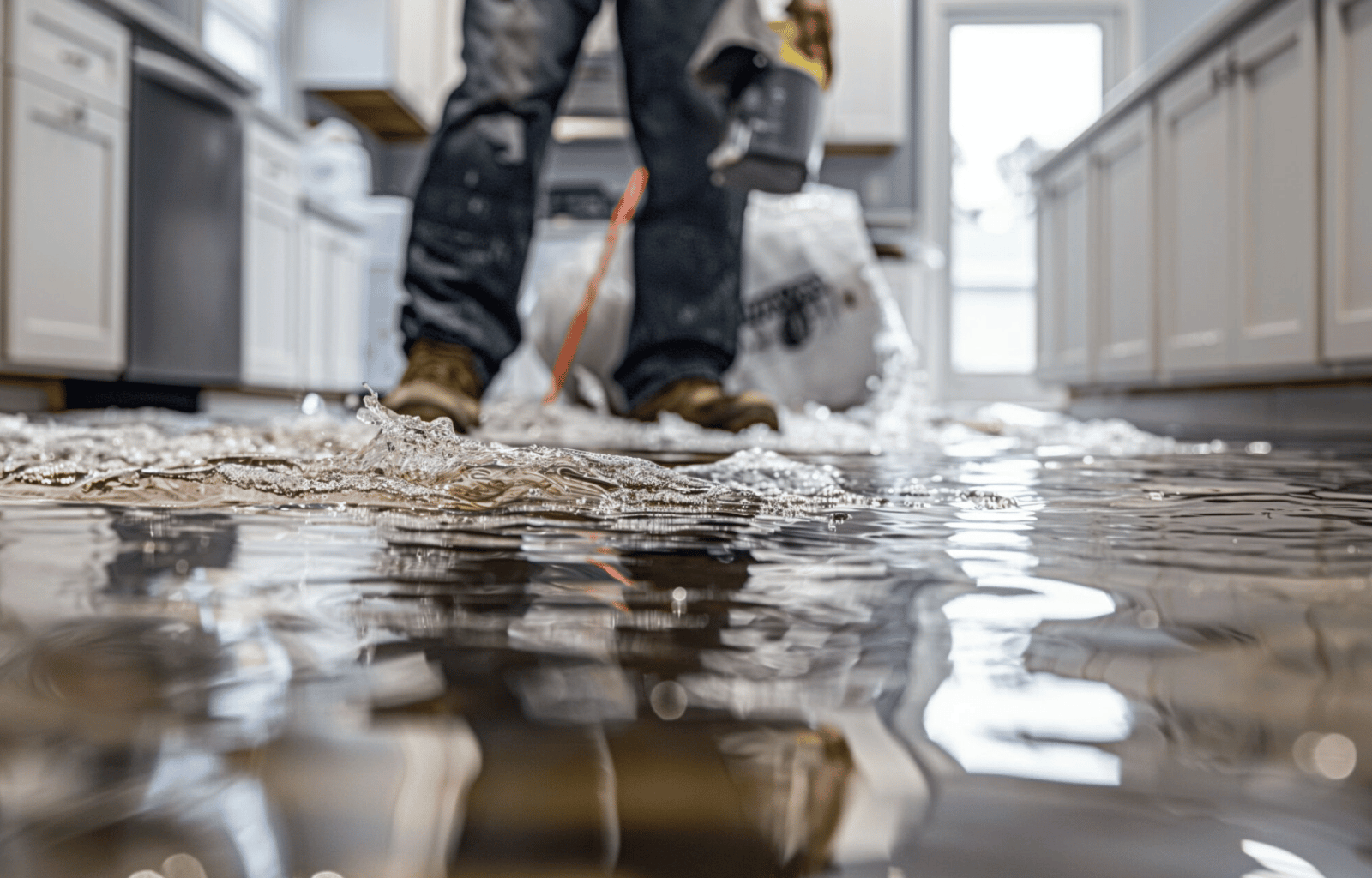
The first service a water restoration company provides is rapid deployment — typically within 1–2 hours of an emergency call. The immediate priority is stopping active water intrusion and removing standing water before it migrates deeper into structural materials.
- Truck-mounted or portable extraction units remove bulk water from floors, carpets, and hard surfaces
- Wet-vac extraction from wall cavities and subfloor if water has penetrated below surface materials
- Removal of saturated contents that cannot be dried in place (carpets, padding, furniture)
- Initial moisture mapping with meters to document the extent of saturation
2. Water Damage Assessment and Classification
Before placing equipment, certified technicians assess the damage according to IICRC S500 classifications. This classification determines the level of contamination, the drying strategy, and the equipment required.
- Category 1 (Clean water) — Burst supply pipes, appliance failures, overflow from clean sources
- Category 2 (Grey water) — Dishwasher overflow, washing machine discharge, some toilet overflows
- Category 3 (Black water) — Sewage backup, flooding from external sources, long-standing water with contamination
Category 3 water damage (including sewage backup) requires full personal protective equipment, antimicrobial treatment, and the disposal of all porous materials that contacted the water — not just drying.
3. Structural Drying and Dehumidification
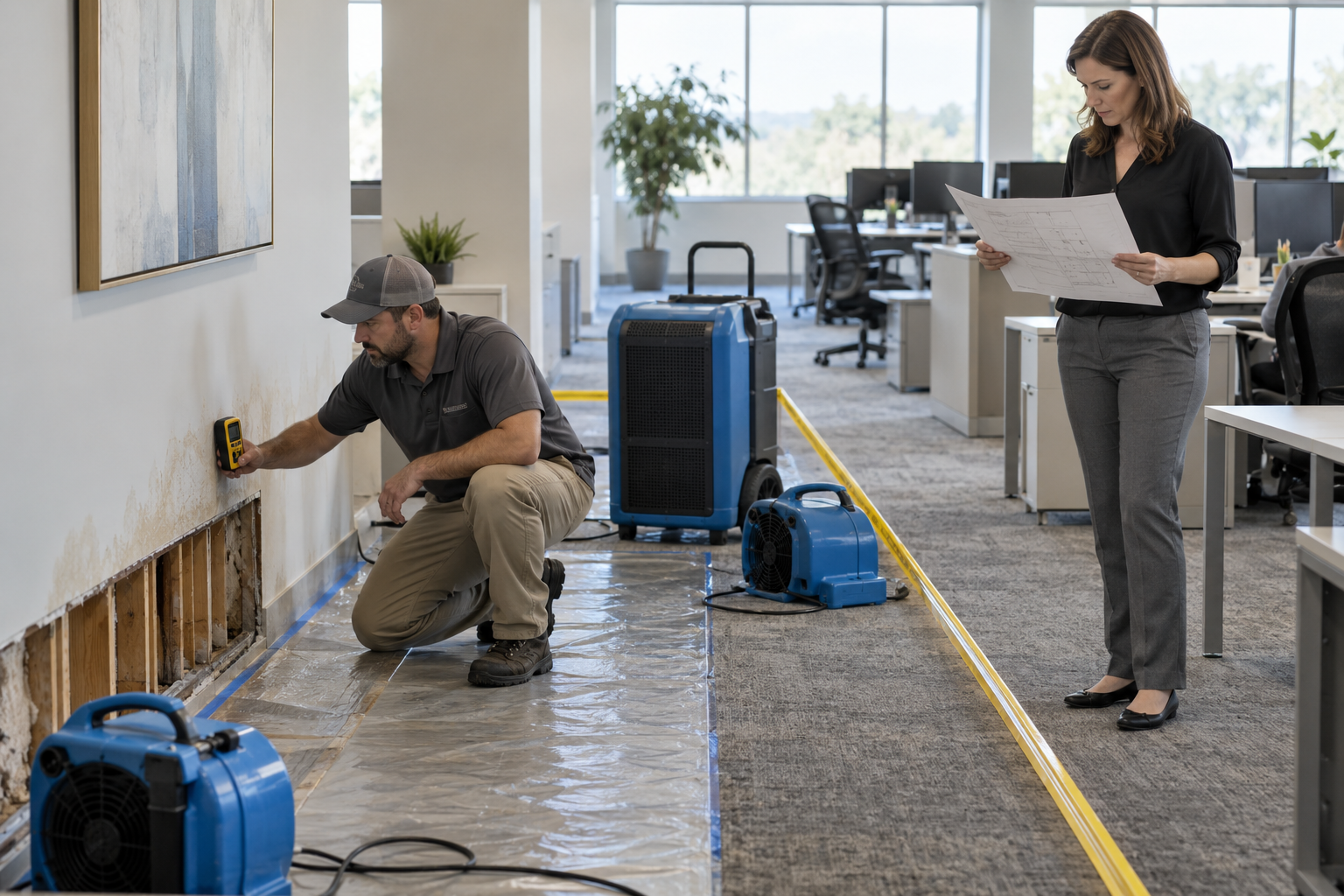
This is the most technically intensive phase, and it is where the quality gap between professional and inadequate restoration is most pronounced. Water absorbed into drywall, framing, insulation, and subfloor cannot be vacuumed out — it must be evaporated from within the material and captured by dehumidification equipment.
- Air movers — High-velocity axial fans positioned to maximize evaporation from affected surfaces
- Commercial dehumidifiers — Refrigerant or desiccant units that extract moisture from the air as water evaporates from materials
- Injectidry systems — Directed drying for wall cavities and under-floor spaces that cannot be dried conventionally
- Drying typically runs 3–5 days and equipment must remain running continuously — it cannot be turned off at night
4. Daily Moisture Monitoring and Documentation
Technicians return each day to take calibrated moisture readings and adjust equipment placement as moisture migrates through the structure. This is not optional — it is a core deliverable of professional restoration work.
- Pin-type and pinless moisture meters measure moisture content in wood, drywall, and concrete
- Psychrometric readings (temperature, relative humidity, dew point) track drying conditions
- Thermal imaging cameras locate hidden moisture that meters cannot reach
- A complete drying log documents readings, equipment settings, and technician notes — this is required for insurance claims
5. Mold Prevention and Antimicrobial Treatment
If the response is rapid (within 24 hours) and drying is completed properly, mold growth can usually be prevented. Restoration companies apply EPA-registered antimicrobial agents to affected surfaces as part of the drying process. If mold is already present, they transition to mold remediation protocols.
6. Controlled Demolition (Tear-Out)
Structural materials that have absorbed too much moisture to dry in place must be removed. This typically includes:
- Wet drywall cut above the saturation line (the "flood cut")
- Saturated insulation behind walls and in attic/crawl spaces
- Swollen or delaminated subfloor panels
- Carpet and pad that cannot be sufficiently dried or that contacted contaminated water
- Baseboards and trim that have absorbed significant moisture
7. Insurance Documentation and Claims Support
A significant part of what water restoration companies do is generating the documentation insurers require: initial damage photos, moisture mapping reports, drying logs, equipment inventory, and scope of work. This documentation supports your claim and reduces adjuster disputes.
- Most certified Calgary restoration companies work directly with Alberta insurance providers
- They submit documentation and negotiate supplement claims on your behalf
- Request copies of all moisture logs and reports for your own files
8. Reconstruction
Full-service water restoration companies complete the job by rebuilding what was removed or damaged. This is the phase most homeowners are thinking of, but it cannot happen until all structural materials reach target dryness levels per IICRC S500.
- Drywall installation and finishing
- Insulation replacement
- Subfloor repair or replacement
- Flooring installation (hardwood, laminate, tile, carpet)
- Trim, paint, and finish work
What Water Restoration Companies Do NOT Do
Understanding the boundaries of restoration service helps avoid confusion about scope:
- They do not repair plumbing — Finding and fixing the pipe or appliance that caused the damage is separate work, done by a licensed plumber before restoration begins
- They are not general contractors — While full-service companies handle reconstruction, large structural repairs (foundation, roof) typically require specialists
- They do not remediate asbestos or lead — If hazardous materials are identified, a certified abatement contractor handles that phase before restoration proceeds
The Difference Between Water Mitigation and Water Restoration
| Phase | What It Includes | Typical Timeline |
|---|---|---|
| Mitigation | Emergency extraction, structural drying, mold prevention, demolition | Days 1–7 |
| Restoration | Reconstruction of removed materials, finishes, return to pre-loss condition | Days 5–21 |
| Full service | Both phases, single company, single point of accountability | 7–21 days total |
How Water Restoration Differs by Water Source
| Water Source | Category | Special Protocols |
|---|---|---|
| Burst supply pipe | Category 1 | Standard drying; no antimicrobial requirement |
| Appliance overflow (dishwasher, washer) | Category 2 | Antimicrobial treatment; some material disposal |
| Basement flooding (storm/groundwater) | Category 3 | Full PPE, antimicrobial, disposal of porous contact materials |
| Sewage backup | Category 3 | Biohazard protocols, full disposal, decontamination — see sewage backup cleanup |
What to Ask a Water Restoration Company Before Hiring
- What IICRC certifications do your on-site technicians hold?
- Do you handle both mitigation and reconstruction, or mitigation only?
- How many times per day or week will you check moisture readings?
- Do you provide a drying log and moisture documentation for insurance?
- What is your emergency response time in Calgary?
- Do you bill insurance directly or do I pay upfront?
For a full checklist on evaluating companies, see our guide on how to choose restoration companies in Calgary. For more on the complete process, visit our water damage restoration service page.
Frequently Asked Questions
What does a water restoration company do first?
The first priority is stopping active water intrusion, then removing standing water with industrial extractors. After bulk extraction, technicians assess moisture levels throughout the structure and deploy drying equipment within the first few hours of arrival.
How long does water restoration take?
Structural drying takes 3–5 days with professional industrial equipment. Full restoration including reconstruction ranges from 7–21 days depending on the extent of damage, contamination category, and scope of reconstruction required.
Is water restoration the same as flood damage cleanup?
Water restoration covers all sources of water damage, including burst pipes, appliance failures, and flooding. Flood damage cleanup specifically refers to water intrusion from external sources — storm water, overland flooding, and river flooding. The restoration process is similar, but flood water is typically Category 3 and requires additional decontamination protocols.
Do water restoration companies handle mold?
Full-service water restoration companies include mold prevention as part of the drying phase. If mold growth is present before or develops during the job, AMRT-certified technicians follow IICRC S520 mold remediation protocols. Many restoration companies are certified for both water damage and mold remediation.
How do restoration companies work with insurance?
Certified restoration companies document damage with photos, moisture readings, and drying logs — all of which support your insurance claim. Most Calgary companies work directly with Alberta insurers, billing them directly and handling supplemental claims without requiring you to manage the paperwork.
What is the IICRC S500 standard?
The IICRC S500 is the professional standard for water damage restoration. It defines assessment procedures, drying protocols, equipment requirements, documentation standards, and acceptable moisture levels for different structural materials. Ask any company you hire whether their work follows S500 — it should.
Can water restoration companies handle sewage backup?
Yes. Sewage backup is classified as Category 3 water damage and requires specific biohazard protocols including full PPE, containment, disposal of all porous contact materials, and antimicrobial decontamination. See our dedicated sewage backup cleanup service for details.
Easy steps to create a color palette
Lorem ipsum dolor sit amet, consectetur adipiscing elit lobortis arcu enim urna adipiscing praesent velit viverra sit semper lorem eu cursus vel hendrerit elementum morbi curabitur etiam nibh justo, lorem aliquet donec sed sit mi dignissim at ante massa mattis.
- Neque sodales ut etiam sit amet nisl purus non tellus orci ac auctor
- Adipiscing elit ut aliquam purus sit amet viverra suspendisse potent
- Mauris commodo quis imperdiet massa tincidunt nunc pulvinar
- Excepteur sint occaecat cupidatat non proident sunt in culpa qui officia
What is a color palette?
Vitae congue eu consequat ac felis placerat vestibulum lectus mauris ultrices cursus sit amet dictum sit amet justo donec enim diam porttitor lacus luctus accumsan tortor posuere praesent tristique magna sit amet purus gravida quis blandit turpis.

Don’t overspend on growth marketing without good retention rates
At risus viverra adipiscing at in tellus integer feugiat nisl pretium fusce id velit ut tortor sagittis orci a scelerisque purus semper eget at lectus urna duis convallis porta nibh venenatis cras sed felis eget neque laoreet suspendisse interdum consectetur libero id faucibus nisl donec pretium vulputate sapien nec sagittis aliquam nunc lobortis mattis aliquam faucibus purus in.
- Neque sodales ut etiam sit amet nisl purus non tellus orci ac auctor
- Adipiscing elit ut aliquam purus sit amet viverra suspendisse potenti
- Mauris commodo quis imperdiet massa tincidunt nunc pulvinar
- Adipiscing elit ut aliquam purus sit amet viverra suspendisse potenti
What’s the ideal customer retention rate?
Nisi quis eleifend quam adipiscing vitae aliquet bibendum enim facilisis gravida neque euismod in pellentesque massa placerat volutpat lacus laoreet non curabitur gravida odio aenean sed adipiscing diam donec adipiscing tristique risus amet est placerat in egestas erat.
“Lorem ipsum dolor sit amet consectetur adipiscing elit, sed do eiusmod tempor incididunt ut labore et dolore magna aliqua enim ad minim veniam.”
Next steps to increase your customer retention
Eget lorem dolor sed viverra ipsum nunc aliquet bibendum felis donec et odio pellentesque diam volutpat commodo sed egestas aliquam sem fringilla ut morbi tincidunt augue interdum velit euismod eu tincidunt tortor aliquam nulla facilisi aenean sed adipiscing diam donec adipiscing ut lectus arcu bibendum at varius vel pharetra nibh venenatis cras sed felis eget.