Quick Answer:Mold can begin growing within 24–48 hours after water damage if building materials are not dried to safe moisture levels. Effective mold removal requires: stopping the moisture source, professional assessment using thermal imaging, IICRC S520-compliant containment and material removal, commercial structural drying, and independent clearance testing. DIY approaches that treat only visible mold without addressing hidden growth reliably fail.
Why Mold Follows Water Damage So Reliably
Mold spores are present in virtually every indoor environment at concentrations that are harmless when building materials stay below germination-threshold moisture levels. A water damage event saturates drywall, wood framing, insulation, and flooring — and holds them above those thresholds for as long as the moisture persists. Under the temperatures of any occupied Calgary home (18–22°C), germination can begin within 24–48 hours.
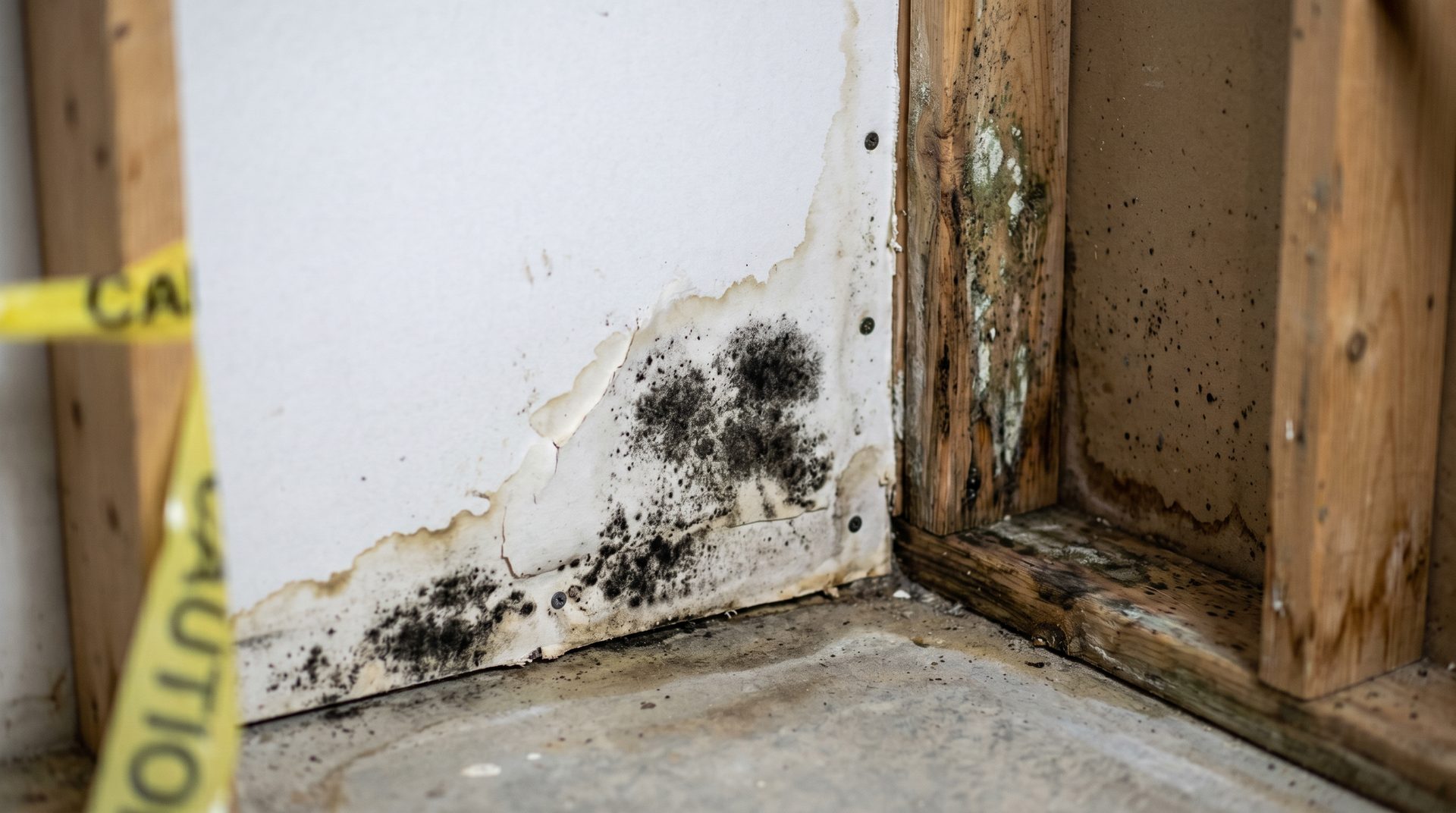
Paper-faced drywall is especially vulnerable. The paper facing provides both a nutrient source and an ideal attachment surface, and once mold begins, it penetrates the gypsum core within days. Wood framing, OSB sheathing, and cellulose-based insulation all support rapid mold growth above approximately 19% moisture content. Concrete and metal don't support mold directly but provide colonization surfaces through accumulated organic debris.
In Calgary, the risk is amplified by finished basements. A basement that floods in March and is dried with a household fan while the family continues using the space is an almost ideal environment for undetected mold establishment. By the time the smell becomes apparent, the colony may span dozens of square feet inside the wall assembly. For context on the scale of mold problems that can develop, see our guide to Calgary mold remediation costs and process.
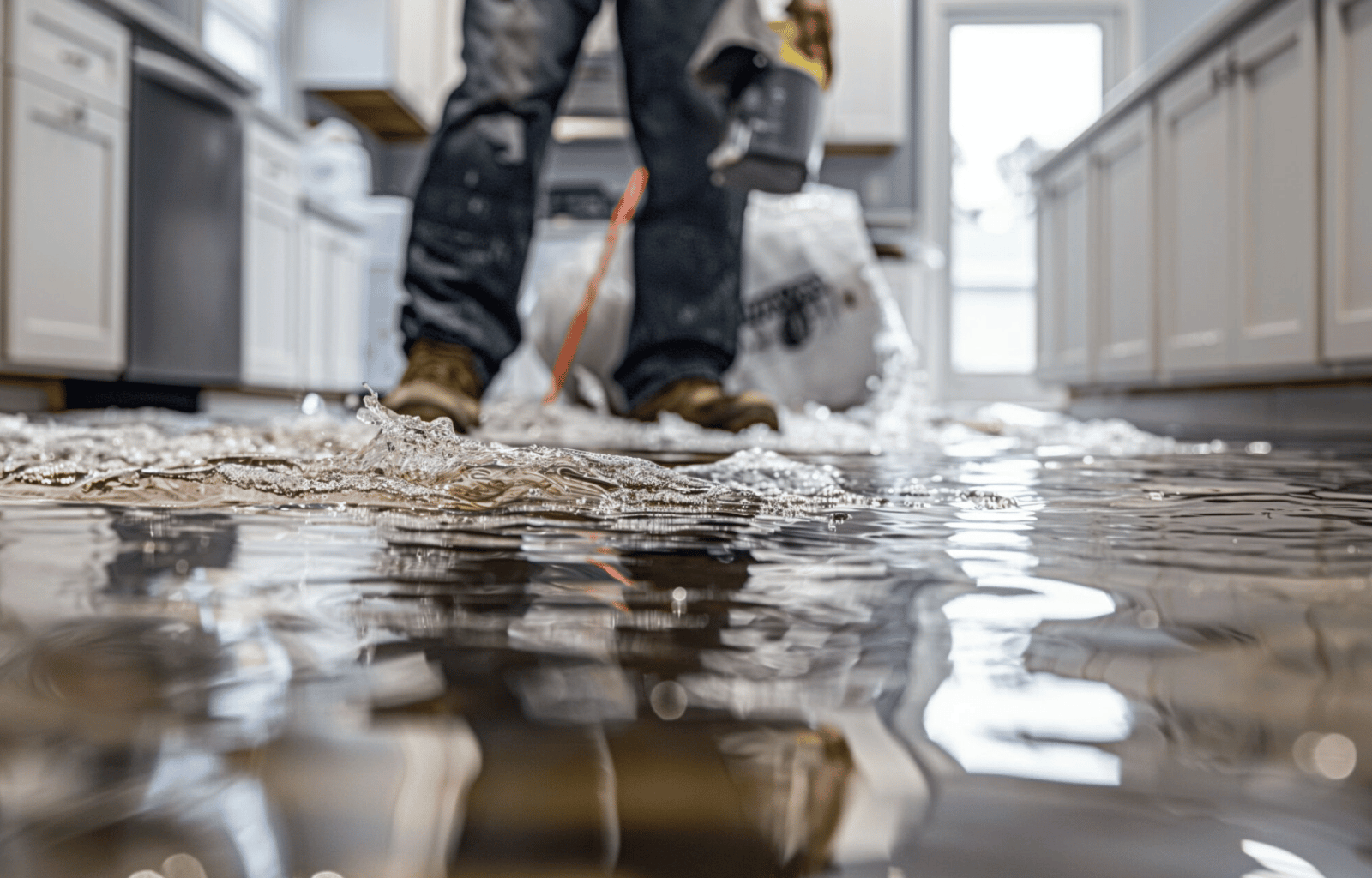
Step 1: Stop the Water Source
No mold removal effort will be durable if the moisture source remains active. This is the most commonly skipped step — people address visible mold without fully resolving the underlying moisture pathway, and mold returns within weeks because the wall cavity stays above safe moisture thresholds.
Common Moisture Sources in Calgary Homes
- Plumbing failures — Burst pipes, failed supply line fittings, leaking drain connections (most common January–February)
- Foundation intrusion — Cracks in poured concrete walls, failed parging, weeping tile system failure
- Appliance leaks — Water heaters, dishwashers, washing machines
- Roof or window failures — Flashing failures, failed sealants, window well drainage blockage
- Chronic condensation — Cold basement walls in summer humidity without adequate vapour barrier or insulation
Foundation intrusion from failing weeping tile or clay soil pressure against basement walls in communities like Shawnessy, Tuscany, or Evergreen often requires substantial drainage repairs before mold remediation can proceed. A certified restoration company will confirm the moisture source is resolved before establishing containment — if a company proposes to begin mold removal while an active moisture pathway remains, that is a significant red flag.
Step 2: Professional Assessment and Documentation
Once the moisture source is confirmed resolved, a thorough assessment determines the scope of mold growth before any materials are disturbed. Photographs and moisture readings taken at this stage are the most important documentation produced during the entire project — they establish the pre-remediation condition your insurance adjuster will use to evaluate the claim.
What a Professional Assessment Includes
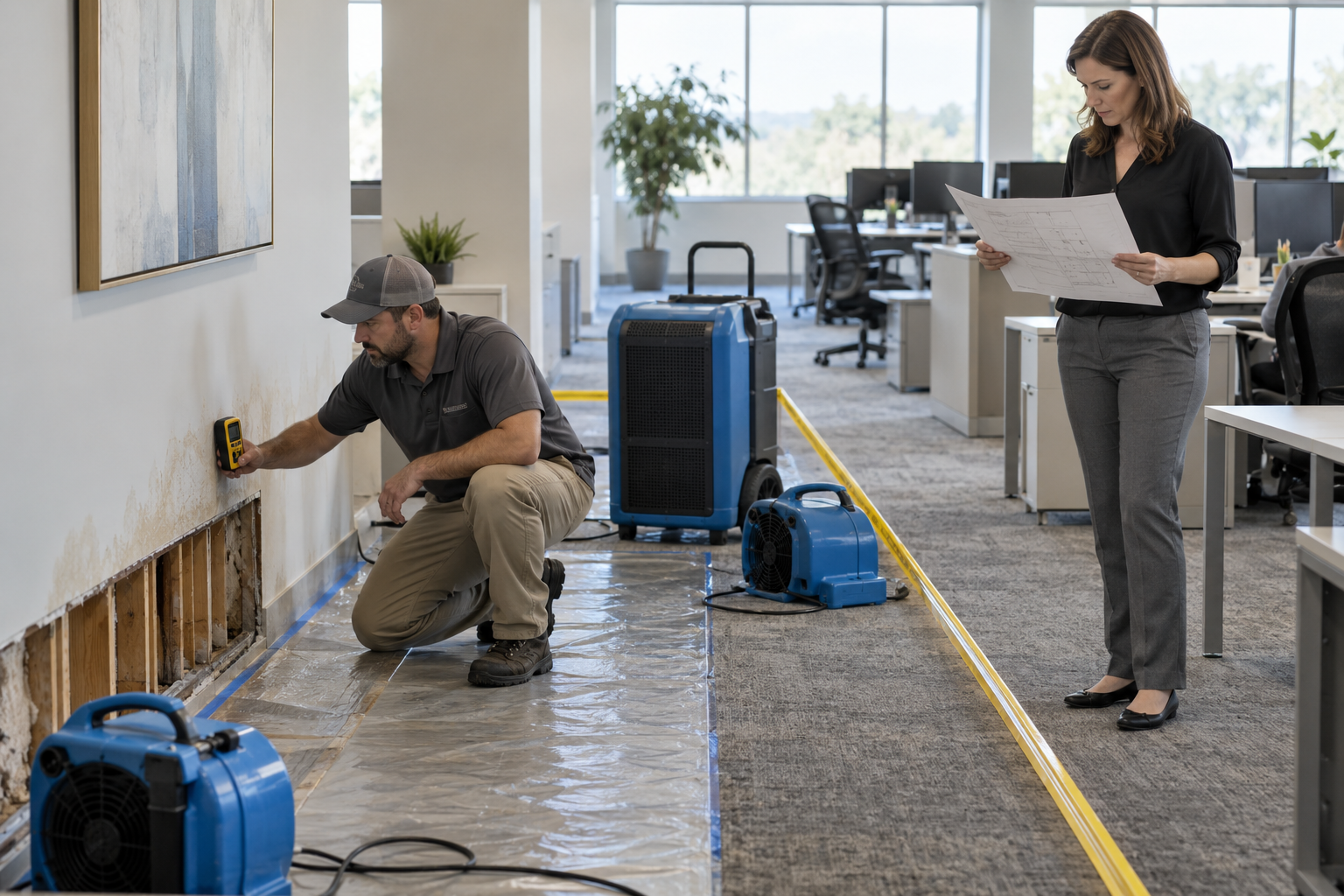
- Thermal imaging — Identifies temperature differentials revealing moisture behind finished surfaces without destructive opening
- Pin and pinless moisture metering — Quantifies moisture content in drywall, wood framing, subfloor, and insulation at multiple points
- Visual inspection — Documents all visible mold growth with photographs, room by room
- Air sampling — Performed by an independent environmental consultant (not the remediation company) to establish spore type and concentration baseline
- Written scope of work — Specifies every material to be removed or treated, the containment strategy, drying targets, and clearance protocol
Step 3: Establish Containment
Before any mold-affected material is disturbed, the work area must be isolated using 6-mil poly sheeting and negative-pressure HEPA-filtered air scrubbers. Negative pressure ensures that disturbed spores are exhausted out of the contained zone rather than migrating to adjacent rooms.
The number of air changes per hour inside the containment zone must meet IICRC S520 minimums — at least 4 air changes per hour for the contained volume. For larger projects, multiple air scrubbers are staged to maintain this standard throughout the work area.
Step 4: Remove Mold-Affected Materials
IICRC S520 is clear on this: porous materials with active mold growth must be physically removed, not treated in place. This includes paper-faced drywall, fibreglass batt insulation, cellulose insulation, carpet and underlayment, and OSB sheathing or subfloor with active colonization.
What Gets Removed vs. Cleaned
| Material | With Active Mold Growth | With Moisture Only (No Visible Growth) |
|---|---|---|
| Paper-faced drywall | Remove | Dry in place if within 24–48 hrs; remove if longer |
| Fibreglass batt insulation | Remove | Remove (cannot be effectively dried) |
| Wood framing (studs, joists) | Clean with EPA antimicrobial + treat; replace if structurally compromised | Dry in place; treat preventively |
| Carpet and pad | Remove | Remove if saturated beyond 24–48 hrs |
| Concrete walls / floors | HEPA vacuum + EPA antimicrobial wipe | Dry in place |
| OSB subfloor | Remove if delaminated or structurally soft | Dry in place if moisture content below 25% and no delamination |
Step 5: Commercial Structural Drying
After mold-affected materials are removed, exposed structural cavities must be dried to IICRC S500 targets before reconstruction: wood framing below 16% moisture content, concrete below 0.5%. Consumer dehumidifiers and box fans cannot achieve these targets in Calgary's climate conditions.
Commercial desiccant or LGR dehumidifiers, paired with air movers positioned at the base of exposed wall cavities, create the airflow and humidity differential needed to drive moisture out of structural members. In Calgary winters, low-temperature-rated equipment is required — standard dehumidifiers lose efficiency at the low ambient temperatures of unheated or partially heated basement spaces.
Daily moisture readings are logged from multiple measurement points throughout the drying period. Drying is not complete until target levels are verified consistently across the entire affected area on consecutive readings — not just once at one location.
Step 6: Independent Clearance Testing
Post-remediation clearance testing must be performed by an independent environmental consultant — not the remediation company. Air samples taken inside the previously contained area are compared to outdoor baseline samples and to unaffected areas of the home. A passing clearance test confirms that spore concentrations have returned to background levels and that the remediation protocol was effective.
Visual inspection alone is insufficient for clearance. Mold can be present at concentrations that represent a health concern before it becomes visible. Any company that offers visual inspection as clearance is not following IICRC S520 standards. Retain the written clearance report with your home records — it may be required by a future home buyer's inspector.
Step 7: Reconstruction
New drywall, insulation, flooring, and finishes are installed only after the clearance test passes. Reconstruction follows Alberta building code requirements and is typically covered under the dwelling portion of your homeowner's insurance policy when the original loss was from a covered event.
DIY Mold Removal vs. Professional Remediation
| Factor | DIY | IICRC-Certified Professional |
|---|---|---|
| Hidden mold detection | Visual only | Thermal imaging + moisture metering |
| Containment | Typically none — spores spread | Negative-pressure poly containment |
| Structural drying | Consumer fans and dehumidifiers (insufficient) | Commercial LGR/desiccant equipment to IICRC targets |
| Clearance verification | None | Independent air quality testing |
| Insurance claim support | No documentation | Full written documentation package |
| Risk of recurrence | High — moisture source often unresolved | Low when moisture source is corrected |
Frequently Asked Questions
How long after water damage does mold start growing?
Mold germination can begin within 24–48 hours of a water intrusion event when moisture content in building materials exceeds germination thresholds and temperatures are within the 10–40°C range. In an occupied Calgary home (18–22°C), these conditions exist year-round. This is why professional water extraction and drying must begin within hours of discovery — not days. Early professional water damage restoration is the most effective mold prevention available.
Can I remove mold myself after water damage?
Health Canada recommends professional remediation for mold growth exceeding 1 square metre (about 10 square feet), any mold in HVAC systems, or where household members have respiratory conditions. In Calgary basement water damage scenarios, the actual extent of mold growth in wall cavities is almost always larger than what is visible at the surface. A professional inspection to scope the problem is warranted before any removal attempts — and what appears to be a small surface patch often turns out to require drywall removal once the wall cavity is opened.
What does mold look like after water damage?
Visible mold after water damage commonly appears as dark grey, green, or black patches on drywall, wood framing, or the back of baseboards. It may have a fuzzy or powdery texture. A musty, earthy odour often precedes visible growth, particularly in enclosed wall cavities. On OSB subfloor or wood framing, early growth may appear as a light grey or white bloom before darkening. Importantly, visible appearance is not a reliable guide to extent — thermal imaging and moisture metering consistently reveal larger affected areas than visual inspection alone.
Will insurance cover mold removal after a covered water damage event?
In most cases, yes. If mold developed as a direct result of a sudden, covered water damage event in Alberta, homeowner's insurance will cover mold remediation as part of the water damage claim. The water event must have been sudden and accidental (not gradual), the claim must be reported promptly, and the mold must be documented as causally related to the covered event. Professional documentation — the restoration company's moisture assessment linking the mold to the water source — is critical for claim approval.
How can I prevent mold after future water intrusion events?
The most important prevention measure is time — beginning professional extraction and drying within hours, not days. Commercial drying equipment deployed immediately and maintained to IICRC moisture targets dramatically reduces mold risk by eliminating the prolonged moisture conditions mold needs to establish. Additional Calgary-specific prevention steps include maintaining clear eavestroughs, proper drainage grading, sump pump maintenance, backwater valve installation in sewer-backup-prone communities, and running a basement dehumidifier March through June during snowmelt season.
How do I know if mold remediation was completed successfully?
Successful mold remediation is confirmed by post-remediation clearance testing from an independent environmental consultant. Air samples must show that indoor spore concentrations and species approximate outdoor ambient baseline levels with no significant amplification of any species. Visual inspection and restoration company self-certification are not sufficient. Without independent clearance testing, you have only the word of the remediating company that the job was done correctly. Retain the clearance report in writing with your home records.
Every day without professional drying after water damage reduces your options and increases your costs. Our emergency restoration team is available around the clock — contact us for immediate assessment.
Easy steps to create a color palette
Lorem ipsum dolor sit amet, consectetur adipiscing elit lobortis arcu enim urna adipiscing praesent velit viverra sit semper lorem eu cursus vel hendrerit elementum morbi curabitur etiam nibh justo, lorem aliquet donec sed sit mi dignissim at ante massa mattis.
- Neque sodales ut etiam sit amet nisl purus non tellus orci ac auctor
- Adipiscing elit ut aliquam purus sit amet viverra suspendisse potent
- Mauris commodo quis imperdiet massa tincidunt nunc pulvinar
- Excepteur sint occaecat cupidatat non proident sunt in culpa qui officia
What is a color palette?
Vitae congue eu consequat ac felis placerat vestibulum lectus mauris ultrices cursus sit amet dictum sit amet justo donec enim diam porttitor lacus luctus accumsan tortor posuere praesent tristique magna sit amet purus gravida quis blandit turpis.

Don’t overspend on growth marketing without good retention rates
At risus viverra adipiscing at in tellus integer feugiat nisl pretium fusce id velit ut tortor sagittis orci a scelerisque purus semper eget at lectus urna duis convallis porta nibh venenatis cras sed felis eget neque laoreet suspendisse interdum consectetur libero id faucibus nisl donec pretium vulputate sapien nec sagittis aliquam nunc lobortis mattis aliquam faucibus purus in.
- Neque sodales ut etiam sit amet nisl purus non tellus orci ac auctor
- Adipiscing elit ut aliquam purus sit amet viverra suspendisse potenti
- Mauris commodo quis imperdiet massa tincidunt nunc pulvinar
- Adipiscing elit ut aliquam purus sit amet viverra suspendisse potenti
What’s the ideal customer retention rate?
Nisi quis eleifend quam adipiscing vitae aliquet bibendum enim facilisis gravida neque euismod in pellentesque massa placerat volutpat lacus laoreet non curabitur gravida odio aenean sed adipiscing diam donec adipiscing tristique risus amet est placerat in egestas erat.
“Lorem ipsum dolor sit amet consectetur adipiscing elit, sed do eiusmod tempor incididunt ut labore et dolore magna aliqua enim ad minim veniam.”
Next steps to increase your customer retention
Eget lorem dolor sed viverra ipsum nunc aliquet bibendum felis donec et odio pellentesque diam volutpat commodo sed egestas aliquam sem fringilla ut morbi tincidunt augue interdum velit euismod eu tincidunt tortor aliquam nulla facilisi aenean sed adipiscing diam donec adipiscing ut lectus arcu bibendum at varius vel pharetra nibh venenatis cras sed felis eget.