Quick Answer:Choose a mold remediation company that holds active IICRC S520 certification, provides a detailed written scope of work before starting, and recommends independent post-remediation clearance testing. In Calgary, the right company also understands local risk factors: freeze-thaw pipe bursts, clay-heavy soils, and spring snowmelt flooding.
Why Mold Remediation Requires Genuine Expertise
Mold is not a surface problem you can solve with bleach and a weekend afternoon. The visible growth on drywall or flooring represents only a fraction of the colony — the rest hides inside wall cavities, beneath flooring, behind insulation, and deep within porous building materials.
True remediation follows the IICRC S520 Standard for Professional Mold Remediation. This standard exists because improper techniques — aggressive dry-scrubbing or using fans to "dry out" mold — aerosolize spores and spread contamination to previously clean areas, turning a localized basement problem into a whole-home hazard.
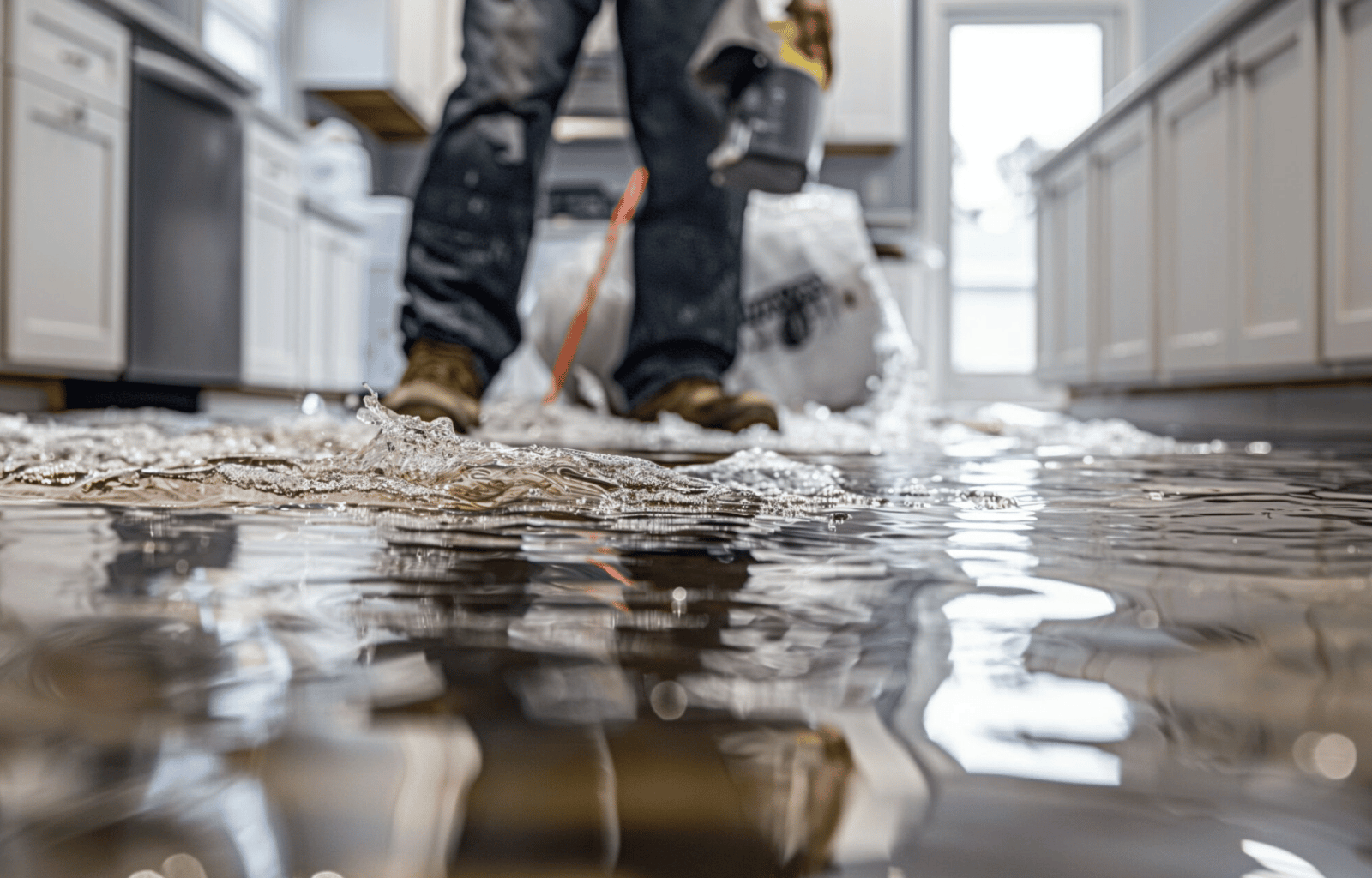
Calgary's climate creates specific mold risk factors. Dramatic freeze-thaw cycles burst pipes and crack foundations. Spring snowmelt saturates the clay-heavy soils common across communities like Riverbend, Shawnessy, and Tuscany, pushing hydrostatic pressure against basement walls. A qualified company must understand these local factors.
Red Flags That Should Disqualify a Company
- No IICRC certification — Technicians should hold active CRMI or AMR credentials. Verify on the IICRC's public registry.
- In-house testing and remediation — This is a direct conflict of interest. Reputable companies recommend an independent industrial hygienist for post-remediation clearance testing.
- Verbal-only quotes — Any legitimate company provides a written remediation plan specifying affected areas, containment strategy, materials to be removed, cleaning methods, drying targets, and clearance protocol.
- Bleach as a primary treatment — Bleach kills surface spores temporarily but drives moisture deeper, accelerating regrowth.
- No moisture assessment — Without thermal imaging and moisture metering at the start, the company cannot confirm the scope or the moisture source.
What Proper Mold Remediation Actually Looks Like
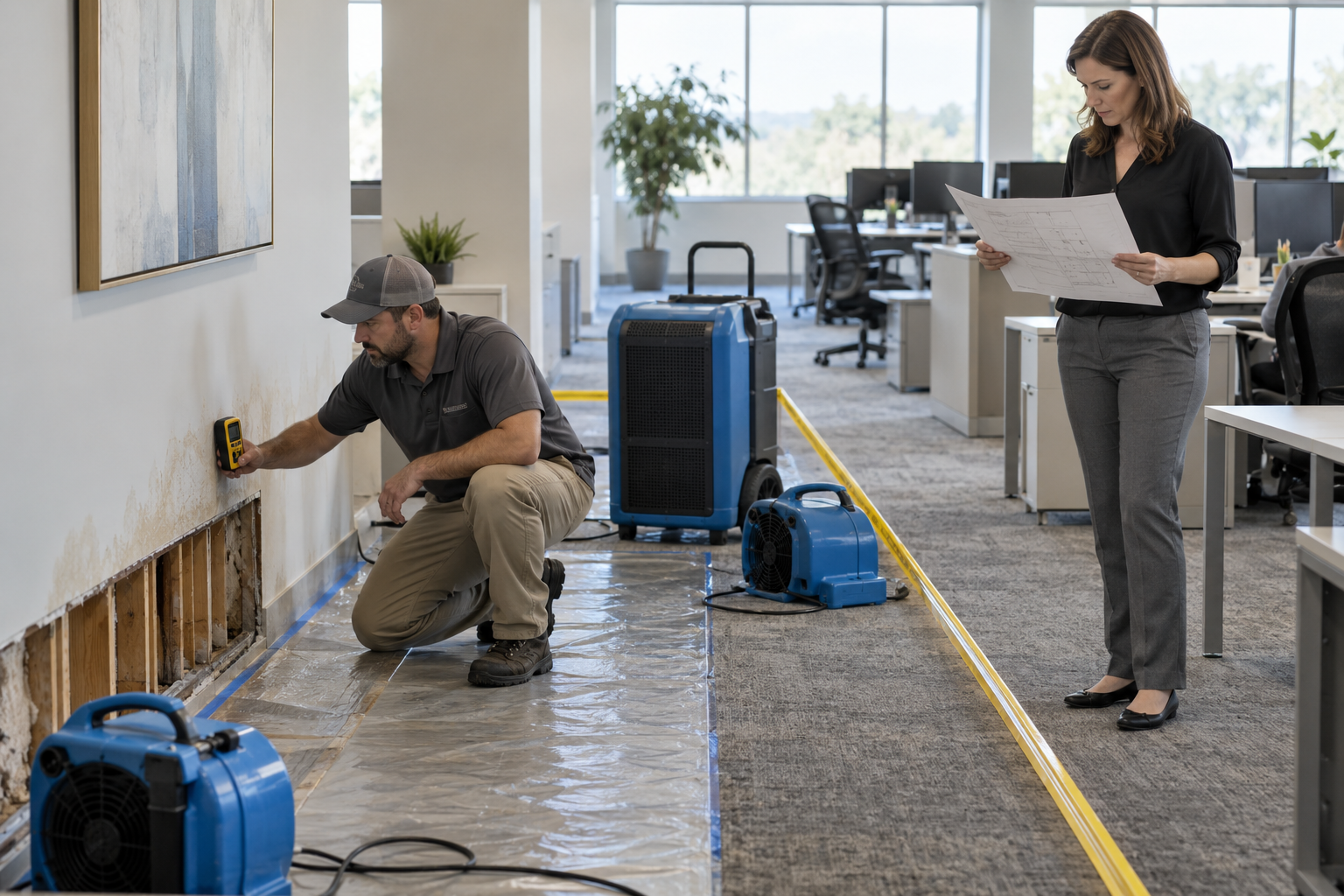
When a certified company arrives, the first step is a thorough moisture assessment using thermal imaging cameras and pin/pinless moisture meters. This locates hidden moisture sustaining growth behind finished surfaces and produces the moisture map your insurance adjuster will need.
The Standard Remediation Process
- Moisture source identification — No remediation should begin until the water source is confirmed resolved.
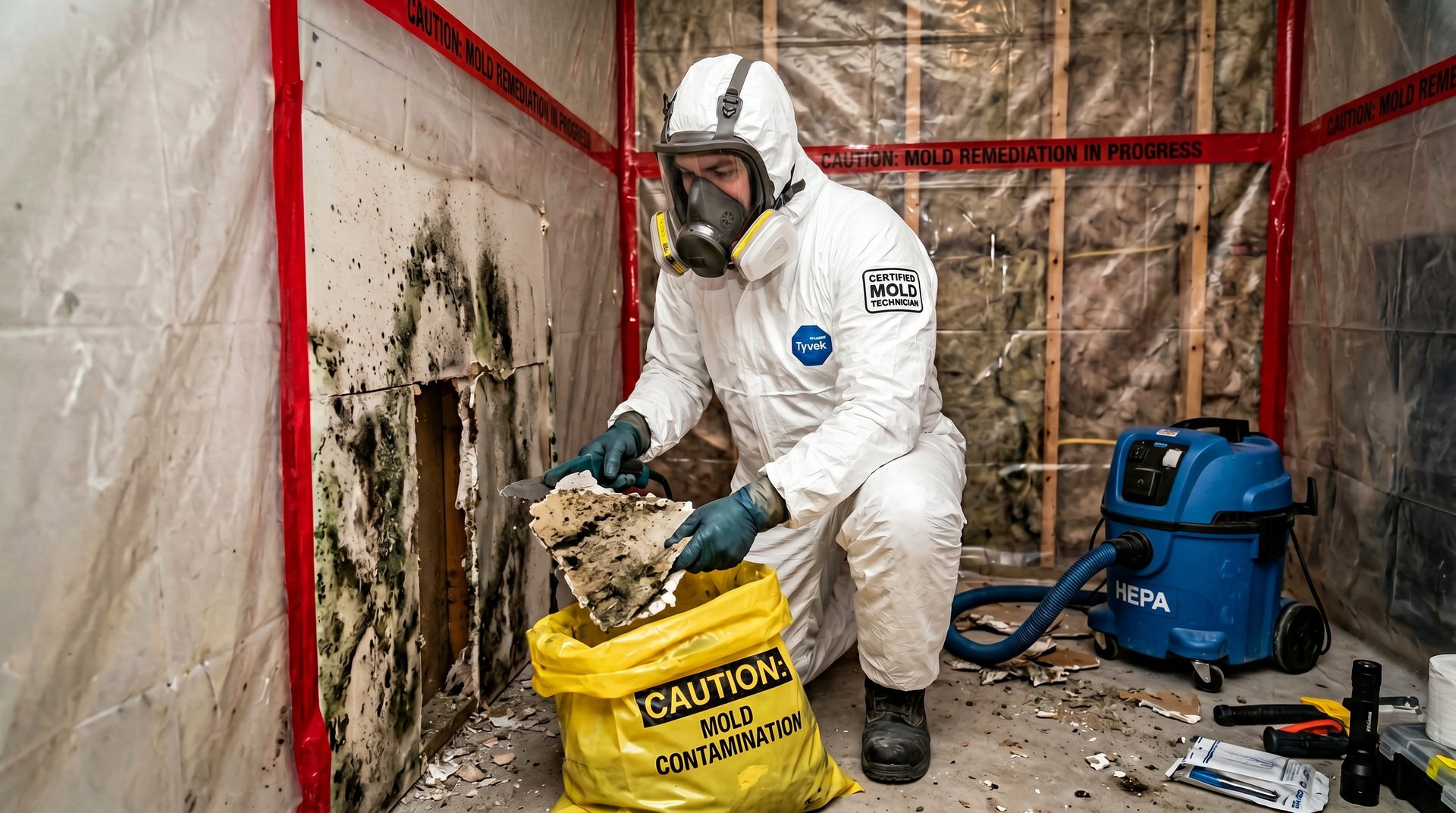
- Containment setup — 6-mil poly sheeting seals off the affected area; HEPA-filtered air scrubbers create negative pressure so disturbed spores are exhausted out, not spread into adjacent rooms.
- Material removal — Per IICRC S520, porous materials (drywall, insulation, carpet) with active mold growth are physically removed, not treated in place.
- HEPA vacuuming and cleaning — Non-porous surfaces are treated with EPA-registered antimicrobial solution and wiped; HEPA vacuums capture airborne particulate throughout.
- Structural drying — Commercial desiccant or LGR dehumidifiers dry the exposed cavity to target moisture levels: wood below 16%, concrete below 0.5%.
- Independent clearance testing — An environmental consultant takes air samples; indoor spore concentrations must approximate outdoor ambient levels before containment is removed.
- Reconstruction — New drywall, insulation, and finishes are installed only after the clearance test passes.
Mold Remediation Cost Ranges in Calgary
| Scope | Typical Cost (CAD) | Timeline |
|---|---|---|
| Small surface area (bathroom tiles/grout, single wall) | $500 – $1,500 | 1–2 days |
| Basement wall with drywall removal and stud treatment | $3,000 – $8,000 | 5–10 days |
| Multi-room or HVAC involvement | $10,000 – $20,000+ | 2–5 weeks |
DIY vs. Professional Mold Remediation
| Factor | DIY | Professional (IICRC-Certified) |
|---|---|---|
| Hidden mold detection | Visual only | Thermal imaging + moisture metering |
| Containment | Typically none | Negative-pressure poly containment |
| Insurance claim support | No documentation | Full written documentation |
| Clearance verification | Visual inspection only | Independent air quality testing |
| Risk of cross-contamination | High | Minimized by IICRC S520 protocols |
Questions to Ask Before Hiring Any Company
- Can you provide the IICRC certification numbers for the technicians who will work in my home?
- Will you provide a written remediation plan before work begins?
- Do you recommend independent clearance testing, and can you refer an environmental consultant?
- How do you identify and document the moisture source?
- Do you handle reconstruction, or will I need a separate contractor?
- How do you work with Alberta insurance adjusters?
Frequently Asked Questions
How do I know if I need a mold remediation company or can handle it myself?
Health Canada recommends professional remediation for any mold growth exceeding 1 square metre (roughly 10 square feet), any mold in HVAC systems, or any situation where the affected occupants include people with respiratory conditions or compromised immune systems. In Calgary, most basement mold problems found after a water damage event exceed this threshold once the wall cavity is opened, because the hidden growth is typically larger than the visible surface area suggests. If you're unsure of the extent, a professional inspection is the right first step.
What certifications should a mold remediation company in Calgary have?
The primary certification standard for mold remediation in Canada is the IICRC S520, which governs assessment, containment, removal, and clearance protocols. Technicians should hold CRMI (Certified Restorer Mold Inspector) or AMR (Applied Microbial Remediation) credentials. Ask for the certification numbers and verify them on the IICRC registry at iicrc.org. Provincial licensing requirements in Alberta for mold remediation are limited, making IICRC certification the most reliable quality indicator available.
Does Alberta homeowner's insurance cover mold remediation?
Alberta homeowner's insurance covers mold remediation when it results directly from a sudden, covered water damage event — a burst pipe, appliance leak, or covered storm entry. The claim is typically processed as part of the underlying water damage claim. Mold from gradual or long-term moisture problems is generally excluded as a maintenance issue. Some Alberta policies have mold sub-limits, so review your policy before approving a large scope of work.
How do I verify mold remediation was successful?
The only reliable verification is post-remediation clearance testing by an independent environmental consultant. Air samples taken inside the previously affected area are compared to outdoor baseline levels. A passing clearance test confirms spore counts have returned to background levels. Visual inspection alone is insufficient — IICRC S520 requires clearance testing as a project close-out step. Request the clearance report in writing and retain it with your home records.
Will mold return after professional remediation?
Mold will not recur in a properly remediated area if the moisture source has been corrected and materials are dried below 16% moisture content. If the original moisture pathway — foundation crack, plumbing leak, failed weeping tile — is not fully resolved, mold will return regardless of how thorough the remediation was. Confirm that the company's scope includes moisture source correction, not just mold removal.
How long does mold remediation take in a Calgary home?
A standard basement mold project typically runs 2–5 days for active remediation (containment, removal, cleaning), followed by 5–10 days of structural drying, 2–5 business days for clearance test lab results, and then reconstruction. Total project duration from assessment to rebuilt walls is typically 3–5 weeks for a single-room basement scope. Projects involving multiple rooms, HVAC decontamination, or flooring replacement run longer.
What is the difference between mold testing and mold remediation?
Mold testing (or mold inspection) involves sampling — air samples, surface swabs, or bulk material samples — to identify whether mold is present, what species are present, and at what concentrations. Mold remediation is the physical process of containing, removing, and cleaning mold-affected materials. Testing should be performed by an independent environmental consultant; remediation by a certified contractor. The same company should not perform both, as this creates a conflict of interest in the clearance determination. See our guide to mold remediation services for more on how the process works.
If you've identified mold growth in your Calgary home — or are dealing with the aftermath of water damage — don't wait. Mold colonies expand significantly within 48 hours. Contact us for a thorough assessment and a written remediation plan.
Easy steps to create a color palette
Lorem ipsum dolor sit amet, consectetur adipiscing elit lobortis arcu enim urna adipiscing praesent velit viverra sit semper lorem eu cursus vel hendrerit elementum morbi curabitur etiam nibh justo, lorem aliquet donec sed sit mi dignissim at ante massa mattis.
- Neque sodales ut etiam sit amet nisl purus non tellus orci ac auctor
- Adipiscing elit ut aliquam purus sit amet viverra suspendisse potent
- Mauris commodo quis imperdiet massa tincidunt nunc pulvinar
- Excepteur sint occaecat cupidatat non proident sunt in culpa qui officia
What is a color palette?
Vitae congue eu consequat ac felis placerat vestibulum lectus mauris ultrices cursus sit amet dictum sit amet justo donec enim diam porttitor lacus luctus accumsan tortor posuere praesent tristique magna sit amet purus gravida quis blandit turpis.

Don’t overspend on growth marketing without good retention rates
At risus viverra adipiscing at in tellus integer feugiat nisl pretium fusce id velit ut tortor sagittis orci a scelerisque purus semper eget at lectus urna duis convallis porta nibh venenatis cras sed felis eget neque laoreet suspendisse interdum consectetur libero id faucibus nisl donec pretium vulputate sapien nec sagittis aliquam nunc lobortis mattis aliquam faucibus purus in.
- Neque sodales ut etiam sit amet nisl purus non tellus orci ac auctor
- Adipiscing elit ut aliquam purus sit amet viverra suspendisse potenti
- Mauris commodo quis imperdiet massa tincidunt nunc pulvinar
- Adipiscing elit ut aliquam purus sit amet viverra suspendisse potenti
What’s the ideal customer retention rate?
Nisi quis eleifend quam adipiscing vitae aliquet bibendum enim facilisis gravida neque euismod in pellentesque massa placerat volutpat lacus laoreet non curabitur gravida odio aenean sed adipiscing diam donec adipiscing tristique risus amet est placerat in egestas erat.
“Lorem ipsum dolor sit amet consectetur adipiscing elit, sed do eiusmod tempor incididunt ut labore et dolore magna aliqua enim ad minim veniam.”
Next steps to increase your customer retention
Eget lorem dolor sed viverra ipsum nunc aliquet bibendum felis donec et odio pellentesque diam volutpat commodo sed egestas aliquam sem fringilla ut morbi tincidunt augue interdum velit euismod eu tincidunt tortor aliquam nulla facilisi aenean sed adipiscing diam donec adipiscing ut lectus arcu bibendum at varius vel pharetra nibh venenatis cras sed felis eget.