How to Find Trusted Mold Remediation Companies
Trusted mold remediation companies employ IICRC AMRT-certified technicians, follow the S520 standard for mold remediation, and provide a written scope of work before any removal begins. The key to finding a reliable company is knowing which credentials to verify and which warning signs to avoid.
Quick Answer:Look for IICRC AMRT (Applied Microbial Remediation Technician) certification, a written remediation protocol, containment procedures, and post-remediation verification testing. Avoid any company that offers mold testing and mold removal as a bundled service — testing and remediation should be performed by separate parties to prevent conflicts of interest.
Why Mold After Water Damage Requires Professional Remediation
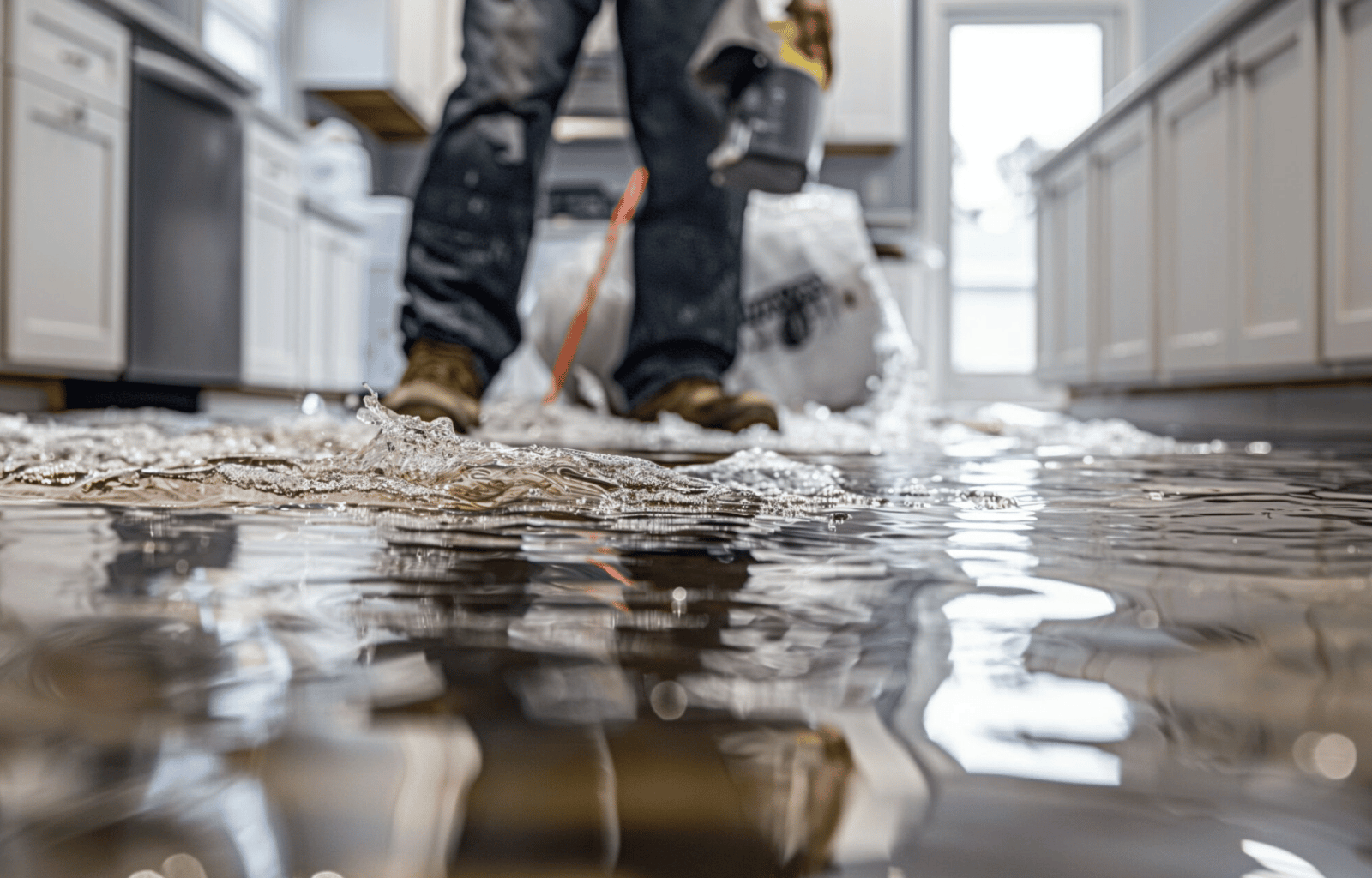
Mold that develops as a result of water damage is not a surface problem. Water that saturates drywall, framing, insulation, and subfloor creates conditions for mold colonization deep within structural materials. In Calgary homes — where basements are typically finished — this means mold can spread through an entire lower level before it becomes visible.
Surface cleaning with bleach or antimicrobial spray does not constitute mold remediation. It addresses only what is visible on the surface while leaving colonies intact within the material. Professional remediation involves physical removal of contaminated materials and controlled containment to prevent spore dispersal during the process.
The Connection Between Water Damage and Mold
Mold requires three things: moisture, organic material, and time. Calgary homes provide all three when water damage goes unaddressed:
- Mold can begin growing on wet drywall within 24–48 hours at normal indoor temperatures
- Calgary's clay-heavy soils and freeze-thaw cycles mean foundation moisture is an ongoing risk, not a one-time event
- Finished basements contain drywall, wood framing, carpet, and insulation — all organic materials that support mold growth
- Common Calgary water damage sources (burst pipes, basement flooding, sewage backup) all create mold risk if drying is delayed or incomplete
If you have visible mold following water damage, the underlying moisture problem must be resolved before any remediation. Removing mold without fixing the water source results in regrowth. See our water damage restoration service for addressing the source.
IICRC S520: The Professional Standard
The IICRC S520 Standard and Reference Guide for Professional Mold Remediation defines the protocols that qualified mold remediation companies follow. Key principles of S520-compliant remediation:
- Source identification first — The moisture source must be identified and corrected before remediation begins
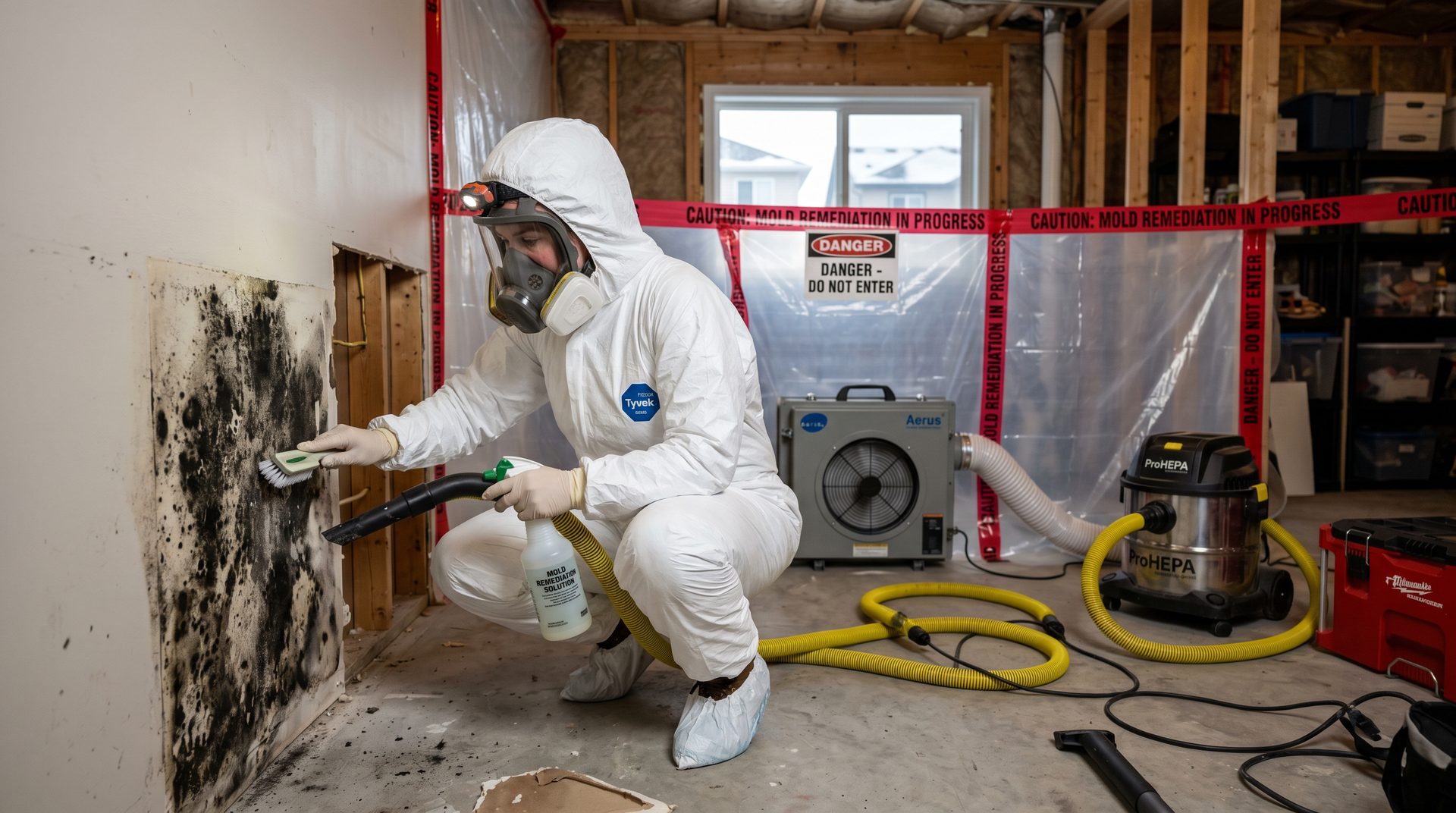
- Containment — Affected areas are isolated with plastic sheeting and negative air pressure to prevent spore dispersal to clean areas
- Physical removal — Contaminated materials (drywall, insulation, carpet) are removed and disposed of, not just treated
- HEPA filtration — Air scrubbers with HEPA filters run continuously during remediation to capture airborne spores
- Post-remediation verification — Air quality or surface testing by an independent party confirms remediation is complete
Credentials That Matter for Mold Remediation Companies
IICRC AMRT Certification
The Applied Microbial Remediation Technician (AMRT) designation is the primary credential for mold remediation professionals. It demonstrates training in containment procedures, personal protective equipment, disposal protocols, and post-remediation verification.
Industrial Hygienist Involvement (CIH or IH)
For significant mold infestations, a Certified Industrial Hygienist (CIH) or industrial hygienist (IH) should conduct the pre-remediation assessment and post-remediation verification. This ensures the scope of work is correctly defined and that results are independently verified.
Additional Credentials to Look For
- General liability insurance (minimum $2 million)
- Workers' compensation coverage
- Alberta business registration and applicable occupational health certifications for hazardous materials if applicable
- Documented training in personal protective equipment and hazardous waste disposal
The Mold Remediation Process: Step by Step
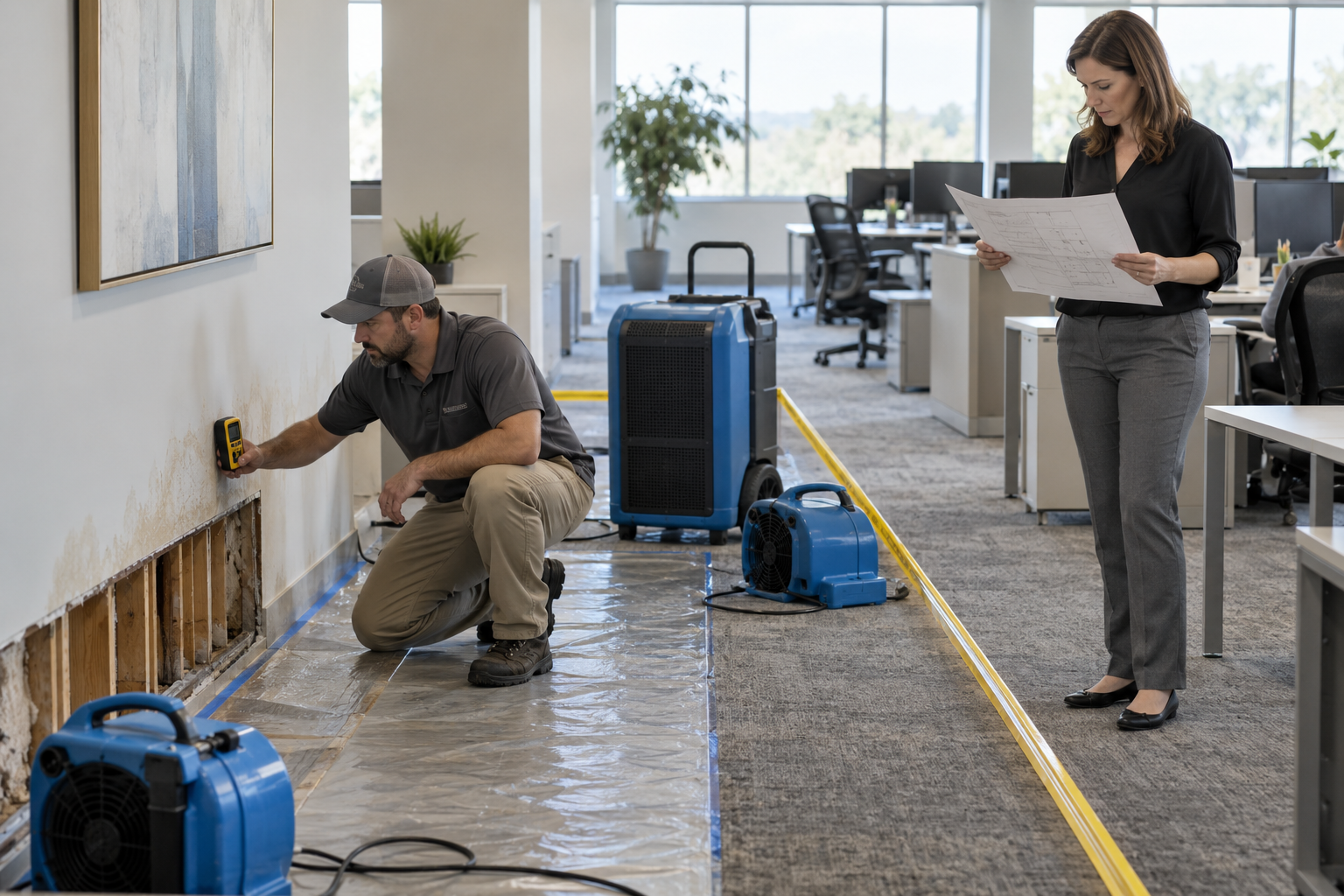
- Moisture investigation — Identify and document all moisture sources using meters and thermal imaging; confirm the water intrusion has been stopped
- Scope of work development — Define affected areas, extent of contamination, and materials to be removed; ideally confirmed by an independent assessor
- Containment setup — Plastic sheeting and negative air pressure isolate the work area; HEPA-filtered air scrubbers run continuously
- Removal of contaminated materials — Affected drywall, insulation, carpet, and other porous materials are removed, bagged, and disposed of per protocol
- HEPA vacuuming and antimicrobial treatment — Remaining structural surfaces are HEPA vacuumed and treated with antimicrobial agents
- Clearance testing — An independent party performs air sampling or surface testing to verify spore counts are within acceptable limits
- Reconstruction — Once clearance is achieved, new drywall, insulation, and finishes are installed
The Conflict of Interest Problem: Testing vs. Remediation
This is the most important thing to understand about hiring mold remediation companies:
Quick Answer:A company that performs both the mold assessment (testing) and the remediation (removal) has a financial incentive to find more mold than actually exists. The testing and remediation phases should always be performed by separate, independent parties. The remediation company should not be the one to determine the scope of their own work.
Best practice: Hire an independent industrial hygienist or environmental consultant to assess the mold and write the remediation scope. Then hire a separate certified remediation company to do the work. Have the independent assessor return for post-remediation clearance testing.
Vetting Checklist: Mold Remediation Companies
| Vetting Criterion | What to Look For | Red Flag |
|---|---|---|
| IICRC AMRT certification | Verifiable certification number | Claims certification but can't produce number |
| Written scope of work | Itemized, signed before work begins | Verbal estimate only |
| Containment protocol | Plastic sheeting, negative air pressure | No mention of containment |
| Physical removal | Contaminated materials removed and disposed | Offers to treat surfaces without removal |
| Post-remediation testing | Independent clearance testing included | Company tests their own work |
| Insurance | Liability + workers' comp confirmed | Cannot provide certificate of insurance |
| References | Verifiable Calgary-area jobs | No local references available |
Questions to Ask a Mold Remediation Company
- Can you provide the IICRC AMRT certification number for the technician who will be on-site?
- Do you perform the assessment and the remediation, or do you recommend independent assessment?
- What containment procedures do you use, and will you maintain negative air pressure during the work?
- Will contaminated drywall and insulation be physically removed, or treated in place?
- Do you include post-remediation clearance testing, and who conducts it?
- What is your protocol if clearance testing fails?
- Do you carry $2 million in general liability insurance?
Mold Remediation Cost Ranges in Calgary
| Scope of Mold Problem | Typical Cost (CAD) | Timeline |
|---|---|---|
| Small area (<10 sq ft), surface mold | $500 – $1,500 | 1–2 days |
| Single room, limited structural involvement | $1,500 – $4,000 | 2–4 days |
| Finished basement, moderate infestation | $4,000 – $10,000 | 5–10 days |
| Extensive structural mold, multiple rooms | $10,000 – $20,000+ | 10–21 days |
These costs do not include reconstruction (replacing drywall and insulation after removal) or the cost of an independent industrial hygienist assessment. For mold that resulted from an insured water damage event, remediation costs are often covered — confirm with your Alberta home insurance provider.
Frequently Asked Questions
How do I find a certified mold remediation company?
Search the IICRC's online directory for AMRT-certified companies in the Calgary area. Verify certification numbers independently, check Google and BBB reviews for patterns, and ask specifically for local Calgary references.
Can I remove mold myself?
Small surface mold on non-porous materials (tile, glass) can sometimes be addressed with proper PPE and cleaning protocols. Any mold involving drywall, insulation, or structural wood — particularly in a Calgary basement after water damage — requires professional remediation to prevent spore dispersal and ensure complete removal.
How do I know if mold is behind my drywall?
Signs include musty odor that persists after drying, discoloration at the base of walls, or health symptoms (respiratory irritation, headaches) that resolve when you leave the building. An independent industrial hygienist can use air sampling or borescope inspection to assess what is inside the wall cavity.
Does insurance cover mold remediation in Calgary?
If mold developed as a direct result of a covered water damage event (burst pipe, appliance failure), remediation is typically covered. Mold from gradual leaks, condensation, or pre-existing conditions is usually excluded. Review your Alberta home insurance policy or contact your broker.
How long does mold remediation take?
Small jobs take 1–2 days. A finished Calgary basement with moderate mold involvement typically takes 5–10 days including containment setup, removal, treatment, and clearance testing. Reconstruction adds additional time after clearance is achieved.
What is post-remediation verification testing?
Post-remediation verification (PRV) is air sampling or surface testing performed by an independent party after remediation is complete. It confirms that airborne spore counts are within acceptable limits and that the job is genuinely done. Never accept a remediation job as complete without independent clearance testing.
Should mold testing and mold remediation be done by the same company?
No. This is a direct conflict of interest. The company performing testing determines the scope — and therefore the cost — of the remediation. Use an independent assessor to define the scope, then hire a separate IICRC-certified remediator to do the work. See our mold remediation service for more information.
Easy steps to create a color palette
Lorem ipsum dolor sit amet, consectetur adipiscing elit lobortis arcu enim urna adipiscing praesent velit viverra sit semper lorem eu cursus vel hendrerit elementum morbi curabitur etiam nibh justo, lorem aliquet donec sed sit mi dignissim at ante massa mattis.
- Neque sodales ut etiam sit amet nisl purus non tellus orci ac auctor
- Adipiscing elit ut aliquam purus sit amet viverra suspendisse potent
- Mauris commodo quis imperdiet massa tincidunt nunc pulvinar
- Excepteur sint occaecat cupidatat non proident sunt in culpa qui officia
What is a color palette?
Vitae congue eu consequat ac felis placerat vestibulum lectus mauris ultrices cursus sit amet dictum sit amet justo donec enim diam porttitor lacus luctus accumsan tortor posuere praesent tristique magna sit amet purus gravida quis blandit turpis.

Don’t overspend on growth marketing without good retention rates
At risus viverra adipiscing at in tellus integer feugiat nisl pretium fusce id velit ut tortor sagittis orci a scelerisque purus semper eget at lectus urna duis convallis porta nibh venenatis cras sed felis eget neque laoreet suspendisse interdum consectetur libero id faucibus nisl donec pretium vulputate sapien nec sagittis aliquam nunc lobortis mattis aliquam faucibus purus in.
- Neque sodales ut etiam sit amet nisl purus non tellus orci ac auctor
- Adipiscing elit ut aliquam purus sit amet viverra suspendisse potenti
- Mauris commodo quis imperdiet massa tincidunt nunc pulvinar
- Adipiscing elit ut aliquam purus sit amet viverra suspendisse potenti
What’s the ideal customer retention rate?
Nisi quis eleifend quam adipiscing vitae aliquet bibendum enim facilisis gravida neque euismod in pellentesque massa placerat volutpat lacus laoreet non curabitur gravida odio aenean sed adipiscing diam donec adipiscing tristique risus amet est placerat in egestas erat.
“Lorem ipsum dolor sit amet consectetur adipiscing elit, sed do eiusmod tempor incididunt ut labore et dolore magna aliqua enim ad minim veniam.”
Next steps to increase your customer retention
Eget lorem dolor sed viverra ipsum nunc aliquet bibendum felis donec et odio pellentesque diam volutpat commodo sed egestas aliquam sem fringilla ut morbi tincidunt augue interdum velit euismod eu tincidunt tortor aliquam nulla facilisi aenean sed adipiscing diam donec adipiscing ut lectus arcu bibendum at varius vel pharetra nibh venenatis cras sed felis eget.